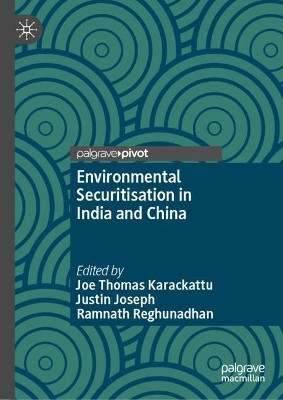
Environmental Securitisation in India and China(English, Hardcover, unknown)
- unknown
Paperback & Hardcover deals ―
Amazon IndiaGOFlipkart ₹ 4099SnapdealGOSapnaOnlineGOJain Book AgencyGOBooks Wagon₹518Book ChorGOCrosswordGODC BooksGOe-book & Audiobook deals ―
Amazon India GOGoogle Play Books GOAudible GO* Price may vary from time to time.
* GO = We're not able to fetch the price (please check manually visiting the website).
Know about the book -
Environmental Securitisation in India and China(English, Hardcover, unknown) is written by unknown and published by Springer Verlag, Singapore. It's available with International Standard Book Number or ISBN identification 9819791596 (ISBN 10) and 9789819791590 (ISBN 13).
This book examines how emerging environmental challenges are situated within existing International Relations (IR) theoretical understandings of 'security'. As governments in the Global South undertake policy interventions to mitigate the impact of increasing climatic changes and yearn to achieve human-nature harmony, one can observe similar patterns of responses chiefly due to the ecology-economy dichotomy in these states and their societies. In this context, it brings to the readers various aspects of the theory and practice of state interventions in the form of environmental securitisation in the Global South majorly under four themes (encompassing theory and policy processes). Chapters in this volume explicate connections between the environment and International Relations Theory, securitisation in developing countries, state society and the environment in India and China and lastly, public participation and environmental policymaking. It presents a comprehensive and coherent overview of the politics of securitisation in India and China, two prominent economies in the Global South. Faculty and researchers who work on non-western International Relations theory and non-traditional security threats, policy practitioners and experts in environmental policymaking, and students of IR and Comparative Politics, chiefly, will benefit from this book.
