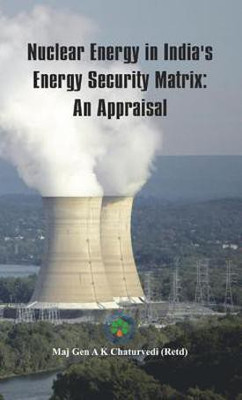
Nuclear Energy in India's Energy Security Matrix(English, Hardcover, Chaturvedi Ajay Kumar)
- Chaturvedi Ajay Kumar
Paperback & Hardcover deals ―
Amazon IndiaGOFlipkart ₹ 1160SnapdealGOSapnaOnlineGOJain Book AgencyGOBooks Wagon₹2,892Book ChorGOCrosswordGODC BooksGOe-book & Audiobook deals ―
Amazon India GOGoogle Play Books GOAudible GO* Price may vary from time to time.
* GO = We're not able to fetch the price (please check manually visiting the website).
Know about the book -
Nuclear Energy in India's Energy Security Matrix(English, Hardcover, Chaturvedi Ajay Kumar) is written by Chaturvedi Ajay Kumar and published by VIJ Books (India) Pty Ltd. It's available with International Standard Book Number or ISBN identification 9382652353 (ISBN 10) and 9789382652359 (ISBN 13).
Energy is essential for the economic growth of a nation. Its absence or deficiency makes a nation highly vulnerable to international arms twisting as well as internal disturbances. As such, it is an important element in a nation's security matrix. India which is in the lower half of the countries as far as the energy consumption per capita is concerned. One of major reasons is the gap between the demand and the capacity of the country to supply the energy from indigenous sources. One of the important sources that hold promise in Indian context is the nuclear energy as it is clean and the resource; thorium to produce power through this route is available indigenously. However despite a well developed plan for energy conversion in place, using indigenous resources for over half a century, it is still considered only promising. Relevant questions in this regard are; whether perceived promise is realizable? If so, in what time frame and at what cost? Will it be safe keeping in view its capacity to cause wide spread devastation? Is there a need to seek technical collaboration with other countries or will it be better to go indigenous route only?How do we tackle the widening demand- supply gap during the interim? And finally is there a case for a review for the existing decision loop/energy management system? An attempt has been made in this book to address these issues. It is also expected that the concept advocated in this book for achieving energy security for India by 2030 will initiate a wider debate on the subject.
