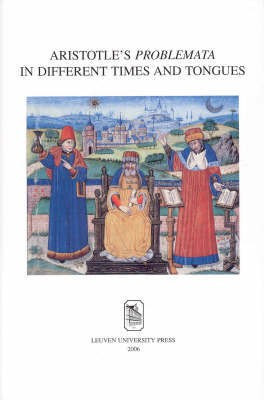
Aristotle's "Problemata" in Different Times and Tongues(English, Paperback, unknown)
- unknown
Paperback & Hardcover deals ―
Amazon IndiaGOFlipkart ₹ 2832SnapdealGOSapnaOnlineGOJain Book AgencyGOBooks WagonGOBook ChorGOCrosswordGODC BooksGOe-book & Audiobook deals ―
Amazon India GOGoogle Play Books GOAudible GO* Price may vary from time to time.
* GO = We're not able to fetch the price (please check manually visiting the website).
Know about the book -
Aristotle's "Problemata" in Different Times and Tongues(English, Paperback, unknown) is written by unknown and published by Leuven University Press. It's available with International Standard Book Number or ISBN identification 9058675246 (ISBN 10) and 9789058675248 (ISBN 13).
Reduced Price! Now only EUR 15,00 instead of EUR 51,00 The present volume contains a collection of papers on the reception of Aristotle's Problemata, a multifaceted text asking various questions about medical, scientific or everyday topics. This text is one of the most neglected Aristotelian treatises, because of its heterogeneous character and its so-called 'inauthenticity'. It has been the subject of a complex transmission. In ancient times, Aristotle's text has been augmented and adapted, while still other authors composed similar collections of Problemata. In the Middle Ages,Problemata collections have been translated into Arabic, Latin, and Middle French, each translation being characterized by its own particularities. The Latin translation lead to an extremely influential commentary by the Italian physician Peter of Abano, whereas Evrart de Conty, who made the Middle French translation, added himself a commentary to each discussed problem, often using Peter of Abano's text as source. Also in the Renaissance, theProblemata appealed to the interest of physicians and philosophers. In their contributions to this book, the authors analyse this complex web of relations between source-texts, translations, and commentaries, in different times and tongues.
