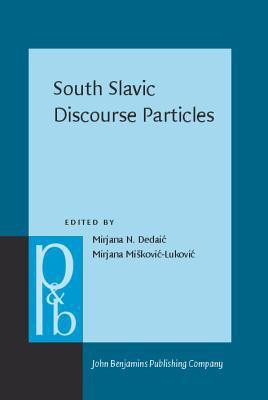
South Slavic Discourse Particles(English, Hardcover, unknown)
- unknown
Paperback & Hardcover deals ―
Amazon IndiaGOFlipkart ₹ 3232SnapdealGOSapnaOnlineGOJain Book AgencyGOBooks Wagon₹819Book ChorGOCrosswordGODC BooksGOe-book & Audiobook deals ―
Amazon India GOGoogle Play Books GOAudible GO* Price may vary from time to time.
* GO = We're not able to fetch the price (please check manually visiting the website).
Know about the book -
South Slavic Discourse Particles(English, Hardcover, unknown) is written by unknown and published by John Benjamins Publishing Co. It's available with International Standard Book Number or ISBN identification 9027256012 (ISBN 10) and 9789027256010 (ISBN 13).
Discourse particles, discourse markers and pragmatic markers refer to phenomena that linguists have begun to probe only since the mid-1980s. Long-ignored in traditional linguistics and textbook grammars, and still relegated to marginal status in South Slavic, these linguistic phenomena have emerged as invaluable devices for cutting-edge theories of the semantics/pragmatics interface. This book, which is a pioneering study in such linguistic phenomena in South Slavic languages, is also among the first of its kind for a related group of languages. It builds on the recent findings of some of the most influential linguistically-oriented theories, such as Relevance Theory, Argumentation Theory and coherence-based approaches to explain the meaning and use of certain discourse/pragmatic particles/markers in Bulgarian, Macedonian, Serbian, Bosnian, Croatian and Slovene. These particles/markers are part of the contemporary and historical lexicons of the South Slavic languages, varying across regions and time, but also differing in origin. This book, which draws from naturally occurring data, written media and constructed examples, aims at a wider audience including scholars working in semantics/pragmatics and Slavic languages, and applied specialists interested in this area of research. The authors hope that this book will be conceived as a starting point for a structured inquiry into the flourishing field of discourse particles in South Slavic.
