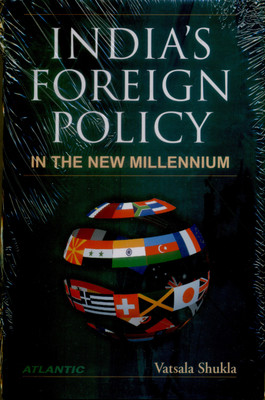
India'S Foreign Policy in the New Millennium(English, Hardcover, Shukla Vatsala)
- Shukla Vatsala
Paperback & Hardcover deals ―
Amazon IndiaGOFlipkart ₹ 838SnapdealGOSapnaOnlineGOJain Book AgencyGOBooks Wagon₹480Book ChorGOCrosswordGODC BooksGOe-book & Audiobook deals ―
Amazon India GOGoogle Play Books GOAudible GO* Price may vary from time to time.
* GO = We're not able to fetch the price (please check manually visiting the website).
Know about the book -
India'S Foreign Policy in the New Millennium(English, Hardcover, Shukla Vatsala) is written by Shukla Vatsala and published by Atlantic Publishers & Distributors Pvt Ltd. It's available with International Standard Book Number or ISBN identification 8126905239 (ISBN 10) and 9788126905232 (ISBN 13).
It is the power and power alone that counts. Achievement, expansion and demonstration of power are the key characteristics of all international relations. It is an all-pervasive phenomenon. This book has beautifully summarized various connotations of power. India has a vast potential of its own and its economic, political and military interests cover areas far beyond Asia. With its scientific and material resources, its size and its strategic location, India is already an important member of the international community. If it keeps growing economically at a fast rate, India will certainly increase its weight in international and regional affairs and be able to enhance its power posture. The present book India’s Foreign Policy in the New Millennium is indeed a comprehensive discourse on India’s foreign policy. It chiefly focuses on post-Cold War global forces, viz. globalization, nuclearization, hegemonism, economic diplomacy, women’s empowerment etc. It brilliantly examines core values of India’s foreign policy as well as the factors affecting such policy at national, regional and global levels. In the end, it categorically mentions the strategies best suited to India, in order to get a Major Power status. This unusual work is well knit, has simple language and is able to engender interest even among the people who are not familiar with the country’s foreign policy. Thus, this book will facilitate such people develop their understanding of and insight into India’s foreign policy. Besides, this wide-ranging book will, undoubtedly, serve as a resource book for policymakers as well as analysts and act as a guide for scholars and students of foreign policy and international relations.
