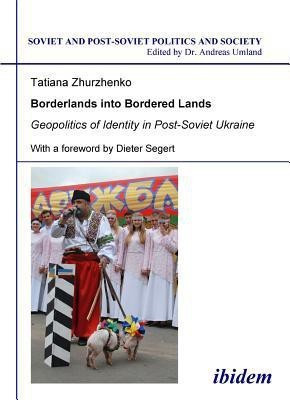
Borderlands into Bordered Lands. Geopolitics of Identity in Post-Soviet Ukraine(English, Paperback, Zhurzhenko Tatiana)
- Zhurzhenko Tatiana
Paperback & Hardcover deals ―
Amazon IndiaGOFlipkart ₹ 6569SnapdealGOSapnaOnlineGOJain Book AgencyGOBooks Wagon₹1,410Book ChorGOCrosswordGODC BooksGOe-book & Audiobook deals ―
Amazon India GOGoogle Play Books GOAudible GO* Price may vary from time to time.
* GO = We're not able to fetch the price (please check manually visiting the website).
Know about the book -
Borderlands into Bordered Lands. Geopolitics of Identity in Post-Soviet Ukraine(English, Paperback, Zhurzhenko Tatiana) is written by Zhurzhenko Tatiana and published by ibidem-Verlag, Jessica Haunschild u Christian Schon. It's available with International Standard Book Number or ISBN identification 383820042X (ISBN 10) and 9783838200422 (ISBN 13).
Since 1991, post-Soviet political elites in Ukraine, Russia and Belarus have been engaged in nation -- as well as state-building. They have tried to strengthen territorial sovereignty and national security, re-shape collective identities and re-narrate national histories. Former Soviet republics have become new neighbours, partners and competitors searching for geopolitical identity in the new Eastern Europe," i.e. the countries left outside the enlarged EU. Old paradigms such as "Eurasia" or "East Slavic civilisation" have been re-invented and politically instrumentalised in the international relations and domestic politics of these countries. At the same time, these old concepts and myths have been contested and challenged by pro-Western elites. The main subject of this book is the construction of post-Soviet borders and their political, social and cultural implications. It focuses on the exemplary case of the Ukrainian-Russian border, approaching it as a social construct and a discursive phenomenon. The book shows how the symbolic meanings of and narratives on this border contribute to national identity formation and shape the images of the neighbouring countries as "the Other" thereby shedding new light on the role of border disputes between Ukraine and Russia in bilateral relations, in EU neighbourhood politics and in domestic political conflicts. The study also addresses "border making" on the regional level, focusing on the cross-border co-operation between Kharkiv and Belgorod and on the dilemmas of a Euro-region "in absence of Europe". Finally, it reflects the everyday experiences of the residents of near-border villages and shows how national and local identities are performed at, and transformed by, the new border.
