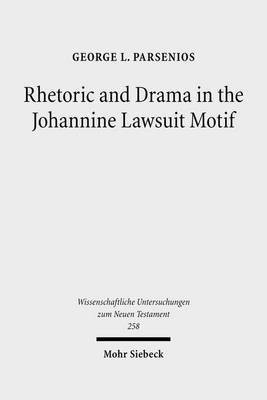
Rhetoric and Drama in the Johannine Lawsuit Motif(English, Hardcover, Parsenios George L.)
- Parsenios George L.
Paperback & Hardcover deals ―
Amazon IndiaGOFlipkart ₹ 2759SnapdealGOSapnaOnlineGOJain Book AgencyGOBooks Wagon₹425Book ChorGOCrosswordGODC BooksGOe-book & Audiobook deals ―
Amazon India GOGoogle Play Books GOAudible GO* Price may vary from time to time.
* GO = We're not able to fetch the price (please check manually visiting the website).
Know about the book -
Rhetoric and Drama in the Johannine Lawsuit Motif(English, Hardcover, Parsenios George L.) is written by Parsenios George L. and published by JCB Mohr (Paul Siebeck). It's available with International Standard Book Number or ISBN identification 3161502620 (ISBN 10) and 9783161502620 (ISBN 13).
George L. Parsenios explores the legal character of the Gospel of John in the light of classical literature, especially Greek drama. Johannine interpreters have explored with increasing interest both the legal quality and the dramatic quality of the Fourth Gospel, but often do not connect these two ways of reading John. Some interpreters even assume that the one approach excludes the other, and that John is either legal or dramatic, but not both. Legal rhetoric and tragic drama, however, were joined throughout antiquity in a complex pattern of mutual influence. To connect John to drama, therefore, is to connect John to legal rhetoric, and doing so helps to see even more clearly the pervasiveness of the legal motif in the Gospel of John. Tracing the legal character of "seeking" in Sophocles' Oedipus Rex, for example, sheds new light on the legal character of "seeking" in the Fourth Gospel, especially in the enigmatic comment of Jesus at John 8:50. New insights are also offered regarding the evidentiary character of the signs of Jesus, based on comparison with Aristotle's comments about signs and rhetorical evidence in both the Poetics and Rhetoric, as well as by comparison with plays by Aeschylus, Sophocles and Euripides. To call the signs of Jesus evidence, however, does not remove them from the dialectical tension inherent in Johannine theology. If the signs are evidence, they are evidence in a world in which the basis of forming judgments has been problematized by the appearance of the Word in the flesh.
