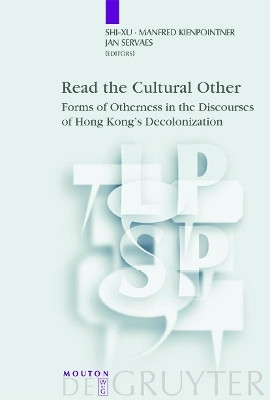
Read the Cultural Other(English, Hardcover, unknown)
- unknown
Paperback & Hardcover deals ―
Amazon IndiaGOFlipkart ₹ 33980SnapdealGOSapnaOnlineGOJain Book AgencyGOBooks Wagon₹489Book ChorGOCrosswordGODC BooksGOe-book & Audiobook deals ―
Amazon India GOGoogle Play Books GOAudible GO* Price may vary from time to time.
* GO = We're not able to fetch the price (please check manually visiting the website).
Know about the book -
Read the Cultural Other(English, Hardcover, unknown) is written by unknown and published by De Gruyter. It's available with International Standard Book Number or ISBN identification 311018267X (ISBN 10) and 9783110182675 (ISBN 13).
Read the Cultural Other contains studies on non-Western discourse. It has two principal aims. Firstly, it argues that the study of non-Western, non-White, and Third-World discourses should become a legitimate, necessary, and routine part of international discourse scholarship. Hitherto, non-Western, non-White, and Third-Word discourses have been relegated and marginalized to a 'local', 'particular', or 'other' place in (or, one might argue, outside) the mainstream. To reclaim their place, the book deconstructs the rhetoric of universalism and the continued preoccupation with Western discourse in the profession, and stresses the cultural nature of discourse, both ordinary and disciplinary, as it outlines a culturally pluralist vision. Secondly, in order to take the multicultural view seriously, it explores the complexity, diversity, and forms of otherness of non-Western discourse by examining the case of China and Hong Kong's discourses of the decolonization of the latter. Far too often, non-Western discourse has been stereotyped as externally discrete, internally homogeneous, and formally containable within a 'universal', 'general', or 'integrated' model. The present work focuses on China and Hong Kong's discourses, which have been marginalized by their Western counterparts. Through culturally eclectic linguistic analysis and local cultural analysis, it identifies and highlights the specific ways of speaking of China and Hong Kong - their concepts, concerns, aspirations, resistance, verbal strategies, etc. - with respect to similar or different issues. The culturally pluralist view and analytical practice proffered here call for a radical cultural change in international scholarship on language, communication, and discourse.
