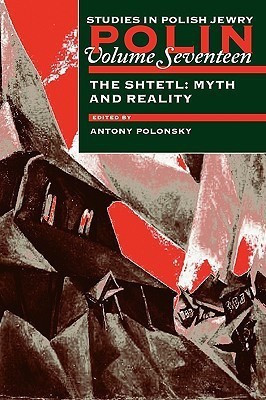
Polin: Studies in Polish Jewry Volume 17(English, Paperback, unknown)
- unknown
Paperback & Hardcover deals ―
Amazon IndiaGOFlipkart ₹ 4564SnapdealGOSapnaOnlineGOJain Book AgencyGOBooks WagonGOBook ChorGOCrosswordGODC BooksGOe-book & Audiobook deals ―
Amazon India GOGoogle Play Books GOAudible GO* Price may vary from time to time.
* GO = We're not able to fetch the price (please check manually visiting the website).
Know about the book -
Polin: Studies in Polish Jewry Volume 17(English, Paperback, unknown) is written by unknown and published by Liverpool University Press. It's available with International Standard Book Number or ISBN identification 1874774765 (ISBN 10) and 9781874774761 (ISBN 13).
The shtetl is one of the key concepts for our understanding of the Jewish past in Eastern Europe. Although today most Jews live in big cities, the majority of Jews in Poland historically lived in the villages and small towns known as shtetls; even as late as 1931, only 43% lived in towns with a population of more than 20,000. The shtetl was thus the main context and arena for Jewish life in Poland, but much of what we know of shtetl life still comes from literary accounts rather than historical research. This volume attempts to redress that imbalance. Among the topics covered are the Jewishness of the shtetl; Polish--Jewish relations and social relations more widely in the shtetl; inter-religious contacts; the hasidic conquest of shtetl life; cultural evolution in the shtetl; Polish shtetls under Russian rule and Soviet shtetls in the 1920s; and a contemporary account of returning to visit a shtetl. Other articles consider how shtetl life has been reflected in Hebrew, Polish, and Yiddish literature. The New Views section analyses the work of the Russian Jewish writer Lev Levanda and the correspondence of an interwar Polish Jew, Wolf Lewkowicz. There are also two articles on the Gesiowka concentration camp established by the Nazis to clear the remains of the Warsaw ghetto. A special section is devoted to whether the incidents in Przytyk in 1936 constituted a pogrom, while another is devoted to discussing two important documents illustrating Wladyslaw Gomulka's attitude to Jews.
