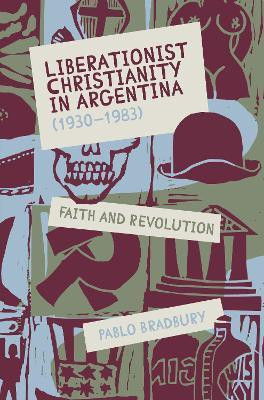
Liberationist Christianity in Argentina (1930-1983)(English, Hardcover, Bradbury Pablo Dr)
- Bradbury Pablo Dr
Paperback & Hardcover deals ―
Amazon IndiaGOFlipkart ₹ 9350SnapdealGOSapnaOnlineGOJain Book AgencyGOBooks Wagon₹2,490Book ChorGOCrosswordGODC BooksGOe-book & Audiobook deals ―
Amazon India GOGoogle Play Books GOAudible GO* Price may vary from time to time.
* GO = We're not able to fetch the price (please check manually visiting the website).
Know about the book -
Liberationist Christianity in Argentina (1930-1983)(English, Hardcover, Bradbury Pablo Dr) is written by Bradbury Pablo Dr and published by Boydell & Brewer Ltd. It's available with International Standard Book Number or ISBN identification 1855663635 (ISBN 10) and 9781855663633 (ISBN 13).
How did liberationist Christianity develop in Argentina between the 1930s and early 1970s? And how did it respond to state terrorism during the Dirty War?Understanding the movement to be dynamic and highly diverse, this book reveals that ecclesial and political conflicts, especially over Peronism and celibacy, were at the heart of the construction of a liberationist Christian identity, which simultaneously internalised deep tensions over its relationship to the Catholic Church. It first situates the rise of a revolutionary Christian impulse in Argentina within changes in society, in Catholicism and Protestantism and in Marxism in the 1930s, before analysing how the phenomenon coalesced in the late sixties into a coherent social movement. Finally, the book examines the responses of liberationist Christians to the intense period of repression under the presidency of Isabel Peron and the rule of the military junta between 1974 and 1983. By exploring these distinct responses and uncovering the heterogeneity of liberationist Christianity, the book offers a fresh analysis of a movement that occupies a major role in the popular memory of the period of state terror, and provides a corrective to narratives that depict the movement as monolithic or as a passive victim of the dictatorship.
