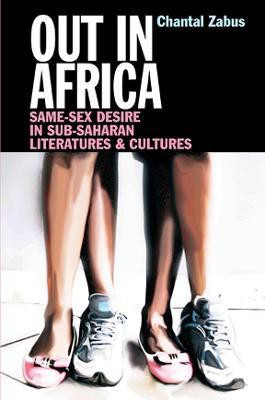
Out in Africa(English, Hardcover, Zabus Chantal)
- Zabus Chantal
Paperback & Hardcover deals ―
Amazon IndiaGOFlipkart ₹ 2567SnapdealGOSapnaOnlineGOJain Book AgencyGOBooks Wagon₹329Book ChorGOCrosswordGODC BooksGOe-book & Audiobook deals ―
Amazon India GOGoogle Play Books GOAudible GO* Price may vary from time to time.
* GO = We're not able to fetch the price (please check manually visiting the website).
Know about the book -
Out in Africa(English, Hardcover, Zabus Chantal) is written by Zabus Chantal and published by James Currey. It's available with International Standard Book Number or ISBN identification 1847010822 (ISBN 10) and 9781847010827 (ISBN 13).
Homophobia is still rife and it remains dangerous and even life-threatening to be out in Africa, but Chantal Zabus here traces the range of representations of same-sex desire in Africa through historic and contemporary sources.Homosexuality was and still is thought to be quintessentially 'un-African'. Yet in this book Chantal Zabus examines the anthropological, cultural and literary representations of male and female same-sex desire in a pan-African context from the nineteenth century to the present. Reaching back to early colonial contacts between Europe and Africa, and covering a broad geographical spectrum, along a north-south axis from Mali to South Africa and an east-west axis from Senegal to Kenya, here is a comparative approach encompassing two colonial languages (English and French) and some African languages. Out in Africa charts developments in Sub-Saharan African texts and contextsthrough the work of 7 colonial writers and some 25 postcolonial writers. These texts grow in complexity from roughly the 1860s, through the 1990s with the advent of queer theory, up to 2010. The author identifies those texts thatpresent, in a subterraneous way at first and then with increased confidence, homosexuality-as-an-identity rather than an occasional or ritualized practice, as was the case in the early ethnographic imagination. The work sketchesout an evolutionary pattern in representing male and female same-sex desire in the novel and other texts, as well as in the cultural and political contexts that oppose such desires.
