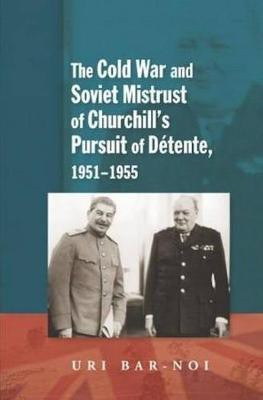
Cold War and Soviet Mistrust of Churchills Pursuit of Detente, 1951-1955(English, Hardcover, Bar-Noi Uri)
- Bar-Noi Uri
Paperback & Hardcover deals ―
Amazon IndiaGOFlipkart ₹ 16242SnapdealGOSapnaOnlineGOJain Book AgencyGOBooks WagonGOBook ChorGOCrosswordGODC BooksGOe-book & Audiobook deals ―
Amazon India GOGoogle Play Books GOAudible GO* Price may vary from time to time.
* GO = We're not able to fetch the price (please check manually visiting the website).
Know about the book -
Cold War and Soviet Mistrust of Churchills Pursuit of Detente, 1951-1955(English, Hardcover, Bar-Noi Uri) is written by Bar-Noi Uri and published by Liverpool University Press. It's available with International Standard Book Number or ISBN identification 1845191765 (ISBN 10) and 9781845191764 (ISBN 13).
The release of previously unavailable Soviet archives has allowed a re-examination of Anglo-Soviet relations during Churchill's peacetime administration, with special emphasis on the Kremlin's motivation for resisting the Prime Minister's attempts to end the Cold War. Throughout 1951-55, the time was not yet ripe for detente: the USSR and Western powers were less than willing to accommodate each other. Instead they engaged in the consolidation of their own blocs and the build-up of their defensive potential. With Winston Churchill becoming the most outspoken advocate of detente, the Kremlin greeted the return to power of the Conservative Party under his leadership with a general mistrust. After Josef Stalin's death in March 1953, detente remained a distant reality. The collective leadership was keen to reduce international tensions without modifying its predecessor's foreign policy, or abandoning Soviet strongholds of central and eastern Europe. As part of its peace offensive, the Kremlin was prepared to improve the atmosphere in relations with Britain and increase the volume of Anglo-Soviet trade. However, the British remained mistrustful of the intentions of Stalin's successors, and refrained from initiatives leading to a relaxation of export controls independent from American embargo policy. The author demonstrates that Stalin's heirs suspected that Churchill's pursuit of detente was designed to secure far-reaching concessions. Moscow also felt that as a junior partner acting in full dependence on and in co-operation with US policy, Churchill was in no position to conciliate between the USSR and the USA. Engaged in a domestic struggle for power, members of the collective leadership were reluctant to allow their opponent, Georgi Malenkov, to negotiate single-handedly with western statesmen. It was only after Nikita Khrushchev's ascendance to power and Churchill's resignation from office that the Kremlin was prepared to participate in summit talks with the western heads of government.
