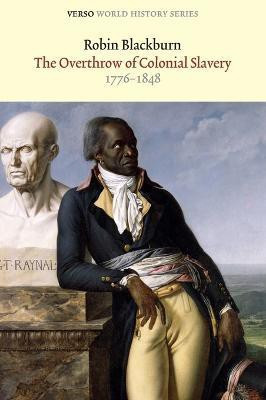
The Overthrow of Colonial Slavery(English, Paperback, Blackburn Robin)
- Blackburn Robin
Paperback & Hardcover deals ―
Amazon IndiaGOFlipkart ₹ 4115SnapdealGOSapnaOnlineGOJain Book AgencyGOBooks Wagon₹1,760Book ChorGOCrosswordGODC BooksGOe-book & Audiobook deals ―
Amazon India GOGoogle Play Books GOAudible GO* Price may vary from time to time.
* GO = We're not able to fetch the price (please check manually visiting the website).
Know about the book -
The Overthrow of Colonial Slavery(English, Paperback, Blackburn Robin) is written by Blackburn Robin and published by Verso Books. It's available with International Standard Book Number or ISBN identification 1844674754 (ISBN 10) and 9781844674756 (ISBN 13).
In 1770 a handful of European nations ruled the Americas, drawing from them a stream of products, both everyday and exotic. Some two and a half million black slaves, imprisoned in plantation colonies, toiled to produce the sugar, coffee, cotton, ginger and indigo craved by Europeans. By 1848 the major systems of colonial slavery had been swept away either by independence movements, slave revolts, abolitionists or some combination of all three. How did this happen? Robin Blackburn's history captures the complexity of a revolutionary age in a compelling narrative. In some cases colonial rule fell while slavery flourished, as happened in the South of the United States and in Brazil; elsewhere slavery ended but colonial rule remained, as in the British West Indies and French Windwards. But in French St. Domingue, the future Haiti, and in Spanish South and Central America both colonialism and slavery were defeated. This story of slave liberation and American independence highlights the pivotal role of the "first emancipation" in the French Antilles in the 1790s, the parallel actions of slave resistance and metropolitan abolitionism, and the contradictory implications of slaveholder patriotism. The dramatic events of this epoch are examined from an unexpected vantage point, showing how the torch of anti-slavery passed from the medieval communes to dissident Quakers, from African maroons to radical pirates, from Granville Sharp and Ottabah Cuguano to Toussaint L'Ouverture, from the black Jacobins to the Liberators of South America, and from the African Baptists in Jamaica to the Revolutionaries of 1848 in Europe and the Caribbean.
