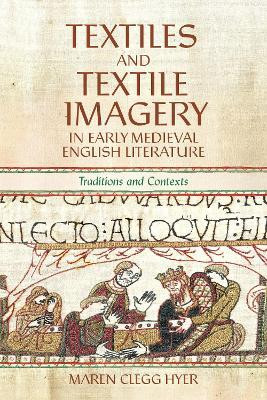
Textiles and Textile Imagery in Early Medieval English Literature(English, Hardcover, Clegg Hyer Maren)
- Clegg Hyer Maren
Paperback & Hardcover deals ―
Amazon IndiaGOFlipkart ₹ 9933SnapdealGOSapnaOnlineGOJain Book AgencyGOBooks Wagon₹6,771Book ChorGOCrosswordGODC BooksGOe-book & Audiobook deals ―
Amazon India GOGoogle Play Books GOAudible GO* Price may vary from time to time.
* GO = We're not able to fetch the price (please check manually visiting the website).
Know about the book -
Textiles and Textile Imagery in Early Medieval English Literature(English, Hardcover, Clegg Hyer Maren) is written by Clegg Hyer Maren and published by Boydell & Brewer Ltd. It's available with International Standard Book Number or ISBN identification 1843847442 (ISBN 10) and 9781843847441 (ISBN 13).
Identifies and analyses a wide range of textile metaphors and imagery from peace-weaving in Beowulf to word-crafting in Elene.Textile metaphors, or metaphors involving the process and product of cloth-making, occur widely in literary traditions around the world. The same phenomenon holds true among the peoples of early medieval England. As close observers of a long and culturally significant textile tradition, pre-Conquest English writers drew upon their close familiarity with spinning and weaving to create a wide range of metaphorical textile images in both Old English and Anglo-Latin literature. This book examines early medieval English textile imagery in close detail, situating it within its cultural and material contexts and addressing the ways in which lived experience informed these metaphors, whether inherited, invented, or both. It explores imagery linked to themes of creation, peace, death, magic, and fate in a comprehensive variety of texts, including Beowulf and Elene, Anglo-Latin letters and riddles, the Exeter Book riddles, prognostics, penitentials, hagiographic and homiletic texts, medical collections, and glosses. Overall, it demonstrates how an understanding of this important body of textile metaphors alters and shapes the ways in which we read the literature of this period.
