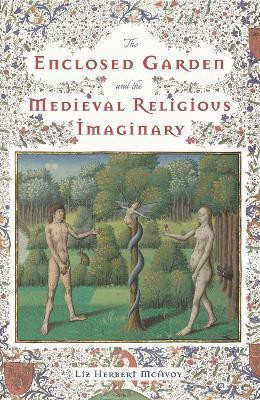
The Enclosed Garden and the Medieval Religious Imaginary(English, Hardcover, McAvoy Liz Herbert)
- McAvoy Liz Herbert
Paperback & Hardcover deals ―
Amazon IndiaGOFlipkart ₹ 12171SnapdealGOSapnaOnlineGOJain Book AgencyGOBooks Wagon₹259Book ChorGOCrosswordGODC BooksGOe-book & Audiobook deals ―
Amazon India GOGoogle Play Books GOAudible GO* Price may vary from time to time.
* GO = We're not able to fetch the price (please check manually visiting the website).
Know about the book -
The Enclosed Garden and the Medieval Religious Imaginary(English, Hardcover, McAvoy Liz Herbert) is written by McAvoy Liz Herbert and published by Boydell & Brewer Ltd. It's available with International Standard Book Number or ISBN identification 1843845989 (ISBN 10) and 9781843845980 (ISBN 13).
During the Middle Ages, the arresting motif of the walled garden - especially in its manifestation as a sacred or love-inflected hortus conclusus - was a common literary device.During the Middle Ages, the arresting motif of the walled garden - especially in its manifestation as a sacred or love-inflected hortus conclusus - was a common literary device. Usually associated with the Virgin Mary or the Lady of popular romance, it appeared in myriad literary and iconographic forms, largely for its aesthetic, decorative and symbolic qualities. This study focuses on the more complex metaphysical functions and meanings attached to it between 1100 and 1400 - and, in particular, those associated with the gardens of Eden and the Song of Songs. Drawing on contemporary theories of gender, gardens, landscape and space, it traces specifically the resurfacing and reworking of the idea and image of the enclosed garden within the writings of medieval holy women and other female-coded texts. In so doing, it presents the enclosed garden as generator of a powerfully gendered hermeneutic imprint within the medieval religious imaginary - indeed, as an alternative "language" used to articulate those highly complex female-coded approaches to God that came to dominate late-medieval religiosity. The book also responds to the "eco-turn" in our own troubled times that attempts to return the non-human to the centre of public and private discourse. The texts under scrutiny therefore invite responses as both literary and "garden" spaces where form often reflects content, and where their authors are also diligent "gardeners": the apocryphal Lives of Adam and Eve, for example; the horticulturally-inflected Hortus Deliciarum of Herrad of Hohenburg and the "green" philosophies of Hildegard of Bingen's Scivias; the visionary writings of Gertrude the Great and Mechthild of Hackeborn collaborating within their Helfta nunnery; the Middle English poem, Pearl; and multiple reworkings of the deeply problematic and increasingly sexualized garden enclosing the biblical figure of Susanna.
