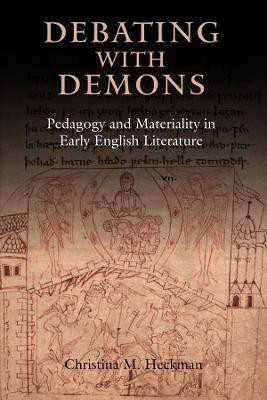
Debating with Demons(English, Hardcover, Heckman Christina M Professor)
- Heckman Christina M Professor
Paperback & Hardcover deals ―
Amazon IndiaGOFlipkart ₹ 12307SnapdealGOSapnaOnlineGOJain Book AgencyGOBooks Wagon₹320Book ChorGOCrosswordGODC BooksGOe-book & Audiobook deals ―
Amazon India GOGoogle Play Books GOAudible GO* Price may vary from time to time.
* GO = We're not able to fetch the price (please check manually visiting the website).
Know about the book -
Debating with Demons(English, Hardcover, Heckman Christina M Professor) is written by Heckman Christina M Professor and published by Boydell & Brewer Ltd. It's available with International Standard Book Number or ISBN identification 1843845652 (ISBN 10) and 9781843845652 (ISBN 13).
A consideration of the theme of demons as teachers in early English literature.In early English literature ca 700-1000 C.E., demons are represented as teachers who use methods of persuasion and argumentation to influence their "pupils". By deploying these methods, related to the liberal arts of rhetoric anddialectic, demons become masters of verbal manipulation. Their pupils are frequently women or Jews, seemingly marginal figures but who often oppose the authority of demonic pedagogues and challenge their deceptive lessons. In poetic accounts of the Fall of the Angels, the Fall of Adam and Eve, and the lives of the saints, those who debate with demons redefine the significance of narrative, authority, and resistance in early medieval pedagogy. This book argues that these encounters between demonic teachers and their pupils are both epistemological, altering the pupils' knowledge, and ontological, affecting their state of being. As the pupils "learn", the physical locations theyoccupy align with rhetorical and dialectical topoi, or conceptual spaces in the mind, as minds, souls, bodies, and places are integrated into cohesive lived experience. The volume thus explores early medieval pedagogy as a spirituo-material practice, both embodied and emplaced, with the potential to alter the onto-epistemological dynamics of the world.
