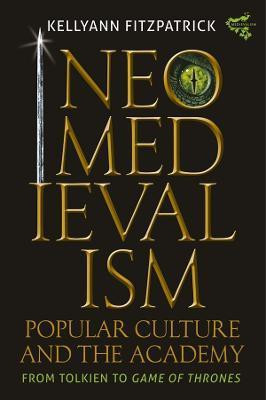
Neomedievalism, Popular Culture, and the Academy(English, Hardcover, Fitzpatrick Kelly Ann)
- Fitzpatrick Kelly Ann
Paperback & Hardcover deals ―
Amazon IndiaGOFlipkart ₹ 12281SnapdealGOSapnaOnlineGOJain Book AgencyGOBooks Wagon₹3,353Book ChorGOCrosswordGODC BooksGOe-book & Audiobook deals ―
Amazon India GOGoogle Play Books GOAudible GO* Price may vary from time to time.
* GO = We're not able to fetch the price (please check manually visiting the website).
Know about the book -
Neomedievalism, Popular Culture, and the Academy(English, Hardcover, Fitzpatrick Kelly Ann) is written by Fitzpatrick Kelly Ann and published by Boydell & Brewer Ltd. It's available with International Standard Book Number or ISBN identification 1843845415 (ISBN 10) and 9781843845416 (ISBN 13).
The medieval in the modern world is here explored in a variety of media, from film and book to gaming.Medievalism - the ways in which post-medieval societies perceive, interpret, reimagine, or appropriate the Middle Ages - permeates popular culture. From Disney princesses to Game of Thrones, medieval fairs to World of Warcraft, contemporary culture keeps finding new ways to reinvent and repackage the period. Medievalism itself, then, continues to evolve while it is also subject to technological advances, prominent invocations in political discourse, and the changing priorities of the academy. This has led some scholars to adopt the term "neomedievalism", a concept originating in part from the work of the late Umberto Eco, which calls for new avenues of inquiry into the ways we think about the medieval. This book examines recent evolutions of (neo)medievalism across multiple media, from Tolkien's Lord of the Rings to the film Beowulf and medieval gaming. These evolutions can take the form of what one might consider to be pop culture objects of critique (art, commodity, amusement park, video game) or academic tools of critique (monographs, articles, lectures, university seminars). It is by reconciling these seemingly disparate forms that we can better understand the continual, interconnected, and often politicized reinvention of the Middle Ages in both popular and academic culture.
