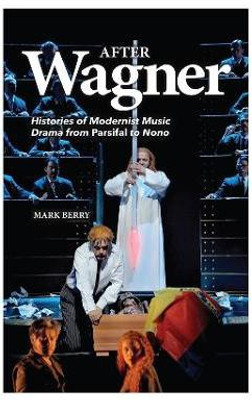
After Wagner(English, Hardcover, Berry Mark)
- Berry Mark
Paperback & Hardcover deals ―
Amazon IndiaGOFlipkart ₹ 11078SnapdealGOSapnaOnlineGOJain Book AgencyGOBooks Wagon₹318Book ChorGOCrosswordGODC BooksGOe-book & Audiobook deals ―
Amazon India GOGoogle Play Books GOAudible GO* Price may vary from time to time.
* GO = We're not able to fetch the price (please check manually visiting the website).
Know about the book -
After Wagner(English, Hardcover, Berry Mark) is written by Berry Mark and published by Boydell & Brewer Ltd. It's available with International Standard Book Number or ISBN identification 1843839687 (ISBN 10) and 9781843839682 (ISBN 13).
Offers histories of music drama beginning with Wagner's Parsifal and then looking at works by Arnold Schoenberg, Richard Strauss, Luigi Dallapiccola, Luigi Nono and Hans Werner Henze.This book is both a telling of operatic histories 'after' Richard Wagner, and a philosophical reflection upon the writing of those histories. Historical musicology reckons with intellectual and cultural history, and vice versa. The 'after' of the title denotes chronology, but also harmony and antagonism within a Wagnerian tradition. Parsifal, in which Wagner attempted to go beyond his achievement in the Ring, to write 'after' himself,is followed by two apparent antipodes: the strenuously modernist Arnold Schoenberg and the aestheticist Richard Strauss. Discussion of Strauss's Capriccio, partly in the light of Schoenberg's Moses und Aron, reveals amore 'political' work than either first acquaintance or the composer's 'intention' might suggest. Then come three composers from subsequent generations: Luigi Dallapiccola, Luigi Nono, and Hans Werner Henze. Geographical context is extended to take in Wagner's Italian successors; the problem of political emancipation in and through music drama takes another turn here, confronting challenges and opportunities in more avowedly 'politically engaged' art. A final section explores the world of staging opera, of so-called Regietheater, as initiated by Wagner himself. Stefan Herheim's celebrated Bayreuth production of Parsifal, and various performances of Lohengrin are discussed, before looking back to Mozart (Don Giovanni) and forward to Alban Berg's Lulu and Nono's Al gran sole carico d'amore. Throughout, the book invites us to consider how we might perceive the aesthetic and political integrity of the operatic work 'after Wagner'. After Wagner will be invaluable to anyone interested in twentieth-century music drama and its intersection with politics and cultural history. It will also appeal to those interested in Richard Wagner's cultural impact on succeeding generations of composers. MARK BERRY is Senior Lecturer in Music at Royal Holloway, University of London.
