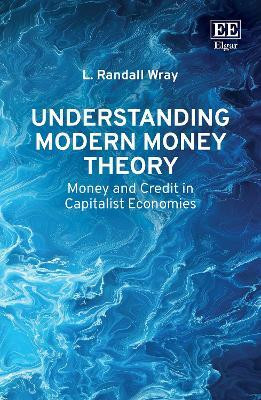
Understanding Modern Money Theory(English, Hardcover, Wray L. Randall)
- Wray L. Randall
Paperback & Hardcover deals ―
Amazon IndiaGOFlipkart ₹ 13333SnapdealGOSapnaOnlineGOJain Book AgencyGOBooks Wagon₹463Book ChorGOCrosswordGODC BooksGOe-book & Audiobook deals ―
Amazon India GOGoogle Play Books GOAudible GO* Price may vary from time to time.
* GO = We're not able to fetch the price (please check manually visiting the website).
Know about the book -
Understanding Modern Money Theory(English, Hardcover, Wray L. Randall) is written by Wray L. Randall and published by Edward Elgar Publishing Ltd. It's available with International Standard Book Number or ISBN identification 180037514X (ISBN 10) and 9781800375147 (ISBN 13).
In this illuminating book, Randall Wray explores the origins, nature, and evolution of money, emphasizing the critical role played by both credit and state money in capitalism. Integrating and updating the influential theories presented in Wray's previous books, Money and Credit in Capitalist Economies and Understanding Modern Money, this new book addresses key questions in modern economic theory and policy. Wray adopts the monetary theory of production shared by the three principle heterodox traditions, Marxism, Institutionalism and Keynesianism to highlight the role played by money in the capitalist system. He applies Keynes's liquidity preference theory and Marx's labor theory of value to examine the determinants of the value of money and uncover the systemic properties driving capitalist production. He provides insights into the vital role of the state in the development and regulation of the modern monetary system. Finally, he identifies how monetary and fiscal policy can be improved to mitigate future challenges and promote economic, social and environmental sustainability. Students and scholars of heterodox approaches to economic theory, the endogenous approach to money and banking, and fiscal and monetary policy will greatly benefit from this valuable book. It is also a vital resource for academics studying the social sciences, such as sociology, political science and anthropology.
