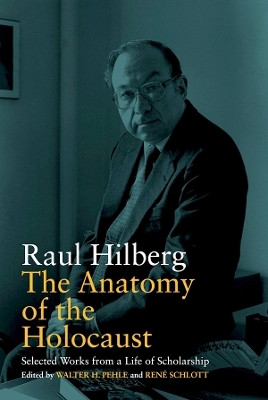
The Anatomy of the Holocaust(English, Electronic book text, unknown)
- unknown
Paperback & Hardcover deals ―
Amazon IndiaGOFlipkart ₹ 3441SnapdealGOSapnaOnlineGOJain Book AgencyGOBooks Wagon₹1,221Book ChorGOCrosswordGODC BooksGOe-book & Audiobook deals ―
Amazon India GOGoogle Play Books ₹9.99Audible GO* Price may vary from time to time.
* GO = We're not able to fetch the price (please check manually visiting the website).
Know about the book -
The Anatomy of the Holocaust(English, Electronic book text, unknown) is written by unknown and published by Berghahn Books. It's available with International Standard Book Number or ISBN identification 1789203562 (ISBN 10) and 9781789203561 (ISBN 13).
A multifaceted look at historian Raul Hilberg, tracing the evolution of Holocaust research from a marginal subdiscipline into a vital intellectual project. "I would recommend this book to both Holocaust historians and general readers alike. The breadth and depth of Hilberg's research and his particular insights have not yet been surpassed by any other Holocaust scholar."-Jewish Libraries News & Reviews Though best known as the author of the landmark 1961 work The Destruction of the European Jews, the historian Raul Hilberg produced a variety of archival research, personal essays, and other works over a career that spanned half a century. The Anatomy of the Holocaust collects some of Hilberg's most essential and groundbreaking writings-many of them published in obscure journals or otherwise inaccessible to nonspecialists-in a single volume. Supplemented with commentary and notes from Hilberg's longtime German editor and his biographer. From the Introduction: This selection by the editors from the multitude of his published texts focuses on Hilberg's intellectual interests as a Holocaust researcher. Among other topics, they deal with the bureaucracy of the Holocaust, the number of victims, the role of the Judenraete(Jewish councils), and the function of the railway and the police in the extermination process. The scholarly impulses extending from Hilberg's work remain remarkable and virulent almost a decade after his death.2 They deserve to be readily accessible in one place to historians and the interested public in the new compilation offered here. Many of the debates influenced by Hilberg are not yet resolved. The texts presented can be quite revealing in light of these controversies.
