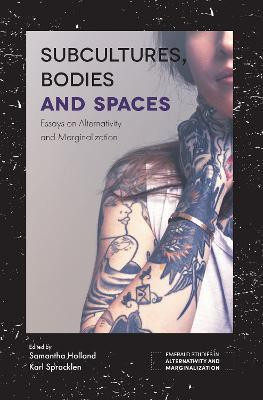
Subcultures, Bodies and Spaces(English, Hardcover, unknown)
- unknown
Paperback & Hardcover deals ―
Amazon IndiaGOFlipkart ₹ 8048SnapdealGOSapnaOnlineGOJain Book AgencyGOBooks Wagon₹3,244Book ChorGOCrosswordGODC BooksGOe-book & Audiobook deals ―
Amazon India GOGoogle Play Books GOAudible GO* Price may vary from time to time.
* GO = We're not able to fetch the price (please check manually visiting the website).
Know about the book -
Subcultures, Bodies and Spaces(English, Hardcover, unknown) is written by unknown and published by Emerald Publishing Limited. It's available with International Standard Book Number or ISBN identification 1787565122 (ISBN 10) and 9781787565128 (ISBN 13).
Alternativity delineates those spaces, scenes, club-cultures, objects and practices in modern society that are considered to be actively designed to be counter or resistive to mainstream popular culture. The idea of the alternative in popular culture became mainstream with the rise of the counter culture in 1960s America (though there were earlier forms of alternative cultures in America and other Western countries). Alternativity is associated with marginalization, both actively pursued by individuals, and imposed on individuals and sub-cultures, and was originally represented and constructed through acts of transgression, and through shared sub-cultural capital. This edited collection maps the landscape of alternativity and marginalization, providing new theory and methods in a currently under-theorized area, setting out the issues, questions, concerns and directions of this area of study. It demonstrates the theoretical richness and empirical diversity of the interdisciplinary field it encompasses, and is deliberately feminist in its approach and its composition, with a majority of the contributors being women. Divided into three sub-sections, focused on sub-cultures, bodies and spaces, contributors explore this exciting new terrain, both through critiques of theory and new theoretical developments, and case studies of alternativity and marginalization in practice and in performance, expanding our understanding of the alternative, the liminal and the transgressive.
