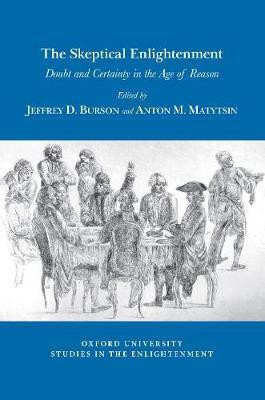
The Skeptical Enlightenment(English, Paperback, unknown)
- unknown
Paperback & Hardcover deals ―
Amazon IndiaGOFlipkart ₹ 13358SnapdealGOSapnaOnlineGOJain Book AgencyGOBooks Wagon₹733Book ChorGOCrosswordGODC BooksGOe-book & Audiobook deals ―
Amazon India GOGoogle Play Books GOAudible GO* Price may vary from time to time.
* GO = We're not able to fetch the price (please check manually visiting the website).
Know about the book -
The Skeptical Enlightenment(English, Paperback, unknown) is written by unknown and published by Liverpool University Press. It's available with International Standard Book Number or ISBN identification 1786941945 (ISBN 10) and 9781786941947 (ISBN 13).
Althoughmany historical narratives often describe the eighteenth century as an unalloyed'Age of Reason', Enlightenment thinkers continued to grapple with thechallenges posed by the revival and spread of philosophical skepticism. Theimperative to overcome doubt and uncertainty informed some of the mostinnovative characteristics of eighteenth-century intellectual culture,including not only debates about epistemology and metaphysics but also mattersof jurisprudence, theology, history, moral philosophy, and politics. Thinkersof this period debated about, established, and productively worked for progresswithin the parameters of the increasingly circumscribed boundaries of humanreason. No longer considered innate and consistently perfect, reason insteadbecame conceived as a faculty that was inherently fallible, limited by personalexperiences, and in need of improvement throughout the course of anyindividual's life. In its depictionof a complicated, variegated, and diverse Enlightenment culture, this volume examines the process by whichphilosophical skepticism was challenged and gradually tamed to bring about ananxious confidence in the powers of human understanding. The variouscontributions collectively demonstrate that philosophical skepticism, andnot simply unshakable confidence in the powers of reason or the optimisticassumption about inevitable human improvement, was, in fact, the crucible ofthe Enlightenment process itself.
