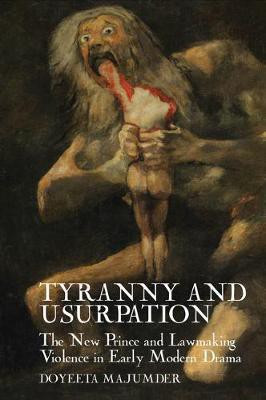
Tyranny and Usurpation(English, Hardcover, Majumder Doyeeta)
- Majumder Doyeeta
Paperback & Hardcover deals ―
Amazon IndiaGOFlipkart ₹ 12311SnapdealGOSapnaOnlineGOJain Book AgencyGOBooks Wagon₹489Book ChorGOCrosswordGODC BooksGOe-book & Audiobook deals ―
Amazon India GOGoogle Play Books GOAudible GO* Price may vary from time to time.
* GO = We're not able to fetch the price (please check manually visiting the website).
Know about the book -
Tyranny and Usurpation(English, Hardcover, Majumder Doyeeta) is written by Majumder Doyeeta and published by Liverpool University Press. It's available with International Standard Book Number or ISBN identification 1786941686 (ISBN 10) and 9781786941688 (ISBN 13).
In the middle years of the sixteenth century, English drama witnessed the emergence of the 'tyrant by entrie' or the usurper, who supplanted earlier 'tyrant by the administration' as the main antihero of political drama. This usurper or, in Machiavellian terms principe nuove, was the prince without dynastic claims who creates his sovereignty by dint of his own 'virtu' and through an act of 'lawmaking' violence. Early Tudor morality plays were exclusively concerned with the legitimate monarch who becomes a tyrant; in the political drama of the first half of the sixteenth century, we do not encounter a single instance of usurpation among the texts that are still available to us. In contrast, the historical and tragic plays of the late Elizabethan and Jacobean periods teem with illegitimate monarchs. Almost all of Shakespeare's history plays, at least four of his ten tragedies, and even a few of his comedies feature usurpation or potential usurpation of sovereign power as a crucial plot device. Why and how does usurpation emerge as a preoccupation in English theatre? What are the political, historical, legal, and dramaturgical transformations that influence and are influenced by this moment of emergence? As the first book-length study devoted exclusively to the study of usurpation and tyranny in sixteenth-century drama and politics, Tyranny and Usurpation: The New Prince and Lawmaking Violence will challenge existing disciplinary boundaries in order to engage with these critical questions.
