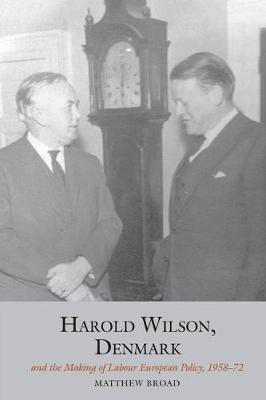
Harold Wilson, Denmark and the making of Labour European policy(English, Hardcover, Broad Matthew)
- Broad Matthew
Paperback & Hardcover deals ―
Amazon IndiaGOFlipkart ₹ 17680SnapdealGOSapnaOnlineGOJain Book AgencyGOBooks Wagon₹364Book ChorGOCrosswordGODC BooksGOe-book & Audiobook deals ―
Amazon India GOGoogle Play Books GOAudible GO* Price may vary from time to time.
* GO = We're not able to fetch the price (please check manually visiting the website).
Know about the book -
Harold Wilson, Denmark and the making of Labour European policy(English, Hardcover, Broad Matthew) is written by Broad Matthew and published by Liverpool University Press. It's available with International Standard Book Number or ISBN identification 1786940485 (ISBN 10) and 9781786940483 (ISBN 13).
'In 1958, Britain and Denmark both advocated closer European cooperation through the looser framework of the Free Trade Area (FTA) rather than membership of the nascent European Economic Community (EEC). By 1972, however, the situation had changed drastically. The FTA was a long-forgotten concept. Its replacement, the European Free Trade Association (EFTA), seemed economically and politically inept. Now, at the third time of asking, both countries were on the verge of joining the EEC as full members. This compelling analysis compares how the European policies of the British Labour Party and the Danish Social Democrats evolved amid this environment. Based on material from 12 archives in four countries, it updates our knowledge of key moments in both parties' interaction with the integration story, including in the formative stages of the EEC in 1958?-60 and the negotiations for British and Danish EEC membership in 1961-63, 1967 and 1970-72. More innovatively, this book argues that amid an array of national and international constraints the reciprocal influence exerted by Labour and the SD on each other via informal party contacts was itself a crucial determinant in European policymaking. In so doing, it sheds light on the sources of Labour European thinking, the role of small states like Denmark in the integration process, and the prominence of the Anglo-Scandinavian nexus in the broader narrative of British foreign policy in this period.'
