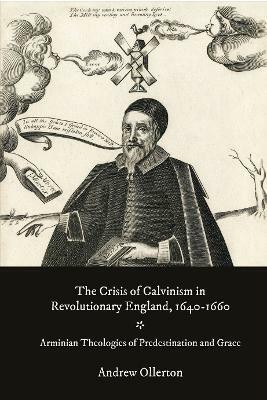
The Crisis of Calvinism in Revolutionary England, 1640-1660(English, Hardcover, Ollerton Andrew Dr)
- Ollerton Andrew Dr
Paperback & Hardcover deals ―
Amazon IndiaGOFlipkart ₹ 9352SnapdealGOSapnaOnlineGOJain Book AgencyGOBooks Wagon₹959Book ChorGOCrosswordGODC BooksGOe-book & Audiobook deals ―
Amazon India GOGoogle Play Books GOAudible GO* Price may vary from time to time.
* GO = We're not able to fetch the price (please check manually visiting the website).
Know about the book -
The Crisis of Calvinism in Revolutionary England, 1640-1660(English, Hardcover, Ollerton Andrew Dr) is written by Ollerton Andrew Dr and published by Boydell & Brewer Ltd. It's available with International Standard Book Number or ISBN identification 1783277734 (ISBN 10) and 9781783277735 (ISBN 13).
This book investigates a puzzling and neglected phenomenon - the rise of English Arminianism during the decade of puritan rule. Throughout the 1650s, numerous publications, from scholarly folios to popular pamphlets, attacked the doctrinal commitments of Reformed Orthodoxy. This anti-Calvinist onslaught came from different directions: episcopalian royalists (Henry Hammond, Herbert Thorndike, Peter Heylyn), radical puritan defenders of the regicide (John Goodwin and John Milton), and sectarian Quakers and General Baptists. Unprecedented rejection of Calvinist soteriology was often coupled with increased engagement with Catholic, Lutheran and Remonstrant alternatives. As a result, sophisticated Arminian publications emerged on a scale that far exceeded the Laudian era. Cromwellian England therefore witnessed an episode of religious debate that significantly altered the doctrinal consensus of the Church of England for the remainder of the seventeenth century. The book will appeal to historians interested in the contested nature of 'Anglicanism' and theologians interested in Protestant debates regarding sovereignty and free will. Part One is a work of religious history, which charts the rise of English Arminianism across different ecclesial camps - episcopal, puritan and sectarian. These chapters not only introduce the main protagonists but also highlight a surprising range of distinctly English Arminian formulations. Part Two is a work of historical theology, which traces the detailed doctrinal formulations of two prominent divines - the puritan John Goodwin and the episcopalian Henry Hammond. Their Arminian theologies are set in the context of the Western theological tradition and the soteriological debates, that followed the Synod of Dort. The book therefore integrates historical and theological enquiry to offer a new perspective on the crisis of 'Calvinism' in post-Reformation England.
