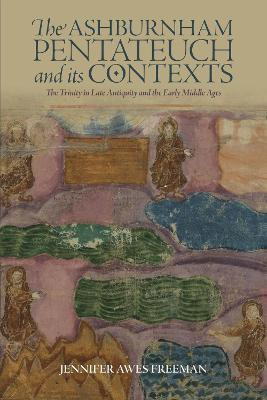
The Ashburnham Pentateuch and its Contexts(Latin, Hardcover, Awes Freeman Jennifer)
- Awes Freeman Jennifer
Paperback & Hardcover deals ―
Amazon IndiaGOFlipkart ₹ 2566SnapdealGOSapnaOnlineGOJain Book AgencyGOBooks Wagon₹3,099Book ChorGOCrosswordGODC BooksGOe-book & Audiobook deals ―
Amazon India GOGoogle Play Books GOAudible GO* Price may vary from time to time.
* GO = We're not able to fetch the price (please check manually visiting the website).
Know about the book -
The Ashburnham Pentateuch and its Contexts(Latin, Hardcover, Awes Freeman Jennifer) is written by Awes Freeman Jennifer and published by Boydell & Brewer Ltd. It's available with International Standard Book Number or ISBN identification 1783276843 (ISBN 10) and 9781783276844 (ISBN 13).
A fresh interpretation of an enigmatic illumination and its contexts.The Ashburnham Pentateuch is an early medieval manuscript of uncertain provenance, which has puzzled and intrigued scholars since the nineteenth century. Its first image, which depicts the Genesis creation narrative, is itself a site of mystery; originally, it presented the Trinity as three men in various vignettes, but in the early ninth century, by which time the manuscript had come to the monastery at Tours, most of the figures were obscured by paint, leaving behind a single creator. In this sense, the manuscript serves as a kind of hinge between the late antique and early medieval periods. Why was the Ashburnham Pentateuch's anthropomorphic image of the Trinity acceptable in the sixth century, but not in the ninth?This study examines the theological, political, and iconographic contexts of the production and later modification of the Ashburnham Pentateuch's creation image. The discussion focuses on materiality, the oft-contested relationship between image and word, and iconoclastic acts as "embodied responses". Ultimately, this book argues that the Carolingian-era reception and modification of the creation image is consistent with contemporaneous iconography, a concern for maintaining the absolute unity of the Trinity, as well as Carolingian image theory following the Byzantine iconoclastic controversy. Tracing the changes in Trinitarian theology and theories of the image offers us a better understanding of the mutual influences between art, theology, and politics during Late Antiquity and the early Middle Ages.
