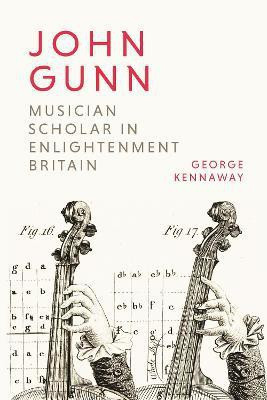
John Gunn: Musician Scholar in Enlightenment Britain(English, Hardcover, Kennaway George)
- Kennaway George
Paperback & Hardcover deals ―
Amazon IndiaGOFlipkart ₹ 9333SnapdealGOSapnaOnlineGOJain Book AgencyGOBooks WagonGOBook ChorGOCrosswordGODC BooksGOe-book & Audiobook deals ―
Amazon India GOGoogle Play Books GOAudible GO* Price may vary from time to time.
* GO = We're not able to fetch the price (please check manually visiting the website).
Know about the book -
John Gunn: Musician Scholar in Enlightenment Britain(English, Hardcover, Kennaway George) is written by Kennaway George and published by Boydell & Brewer Ltd. It's available with International Standard Book Number or ISBN identification 178327641X (ISBN 10) and 9781783276417 (ISBN 13).
Examines the life and work of Scottish cellist and antiquarian John Gunn (1766-1824) through newly discovered sources.The Scottish cellist and antiquarian John Gunn (1766-1824) is unique among British writers on music in the late eighteenth and early nineteenth century. Learned and practical, at home in classical and modern languages, knowledgeable in a wide range of musical topics and with even wider-ranging interests, and committed to the ideal of progress through rational thought, he typified the Enlightenment. His published output was large and diverse: a cello treatise in two quite different editions; two books on the flute and one on the piano; a treatise on figured bass; a history of the harp in the Highlands; and a translation of a French work of music theory. The list of his unrealised publications is even longer, including a proof of the oriental origins of the Scots. He married Anne Young, a well-known Edinburgh piano teacher, and his letters cast new light on the circumstances and date of her death. Taking account of Gunn's diverse experiences as a musician-scholar in Cambridge, London and Edinburgh, studying his sundry occupations, and exploring his social connections through a recently unearthed cache of his letters, this study moves away from 'treatise archaeology' and offers a broader view than is usually possible with such figures. The book will be of interest to those studying historical performance practice, music education in Enlightenment Britain, and the dissemination of Enlightenment thought.
