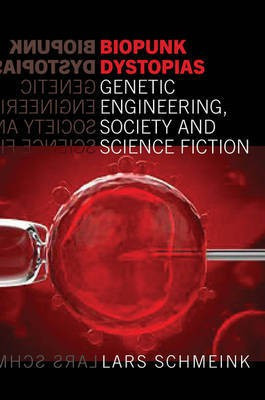
Biopunk Dystopias(English, Hardcover, Schmeink Lars)
- Schmeink Lars
Paperback & Hardcover deals ―
Amazon IndiaGOFlipkart ₹ 6411SnapdealGOSapnaOnlineGOJain Book AgencyGOBooks Wagon₹875Book ChorGOCrosswordGODC BooksGOe-book & Audiobook deals ―
Amazon India GOGoogle Play Books GOAudible GO* Price may vary from time to time.
* GO = We're not able to fetch the price (please check manually visiting the website).
Know about the book -
Biopunk Dystopias(English, Hardcover, Schmeink Lars) is written by Schmeink Lars and published by Liverpool University Press. It's available with International Standard Book Number or ISBN identification 1781383766 (ISBN 10) and 9781781383766 (ISBN 13).
An Open Access edition of this book is available on the Liverpool University Press website and the OAPEN library. Biopunk Dystopias contends that we find ourselves at a historical nexus, defined by the rise of biology as the driving force of scientific progress, a strongly grown mainstream attention given to genetic engineering in the wake of the Human Genome Project (1990-2003), the changing sociological view of a liquid modern society, and shifting discourses on the posthuman, including a critical posthumanism that decenters the privileged subject of humanism. The book argues that this historical nexus produces a specific cultural formation in the form of "biopunk", a subgenre evolved from the cyberpunk of the 1980s. The analysis deals with dystopian science fiction artifacts of different media from the year 2000 onwards that project a posthuman intervention into contemporary socio-political discourse based in liquid modernity in the cultural formation of biopunk. Biopunk makes use of current posthumanist conceptions in order to criticize contemporary reality as already dystopian, warning that a future will only get worse, and that society needs to reverse its path, or else destroy all life on this planet. As Rosi Braidotti argues, "there is a posthuman agreement that contemporary science and biotechnologies affect the very fibre and structure of the living and have altered dramatically our understanding of what counts as the basic frame of reference for the human today". The proposed book analyzes this alteration as directors, creators, authors, and artists from the field of science fiction extrapolate it from current trends.
