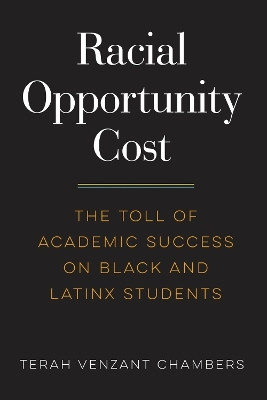
Racial Opportunity Cost(English, Paperback, Chambers Terah Venzant)
- Chambers Terah Venzant
Paperback & Hardcover deals ―
Amazon IndiaGOFlipkart ₹ 3947SnapdealGOSapnaOnlineGOJain Book AgencyGOBooks Wagon₹769Book ChorGOCrosswordGODC BooksGOe-book & Audiobook deals ―
Amazon India GOGoogle Play Books GOAudible GO* Price may vary from time to time.
* GO = We're not able to fetch the price (please check manually visiting the website).
Know about the book -
Racial Opportunity Cost(English, Paperback, Chambers Terah Venzant) is written by Chambers Terah Venzant and published by Harvard Educational Publishing Group. It's available with International Standard Book Number or ISBN identification 1682537447 (ISBN 10) and 9781682537442 (ISBN 13).
Racial Opportunity Cost turns critical attention to the specific challenges faced by high-achieving students of color and gives educators a framework for recognizing and addressing these issues. Terah T. Venzant Chambers roots her discussion in the concept of racial opportunity cost, using a term borrowed from economics to refer to the obstacles faced and tradeoffs made by Black and Latinx students on the path to academic success. Gathering first-hand accounts from students, practitioners, and researchers, Chambers underscores a set of experiences common to academically successful students from racially minoritized backgrounds, especially those who attend predominantly white schools. These individual testimonies collectively show how, despite their successes, high-achieving students of color regularly encounter educational racism. As their experiences reveal, their academic progress may also be impeded by secondary stressors such as peer and cultural isolation and struggles with racial identity. These personal accounts illustrate the many ways in which the negative effects of racial opportunity cost extend from K-12 education into postsecondary academics and beyond. In this clarifying work, Chambers identifies the factors, such as school culture, intersectionality, and community acceptance that can increase or lessen racial opportunity cost across educational environments. She considers how the individual challenges that high-achieving and high-ability students of color confront reflect larger systemic problems. Chambers' framework will help educators proactively cultivate change in their classrooms and schools so that they may lower racial opportunity cost and improve student experiences.
