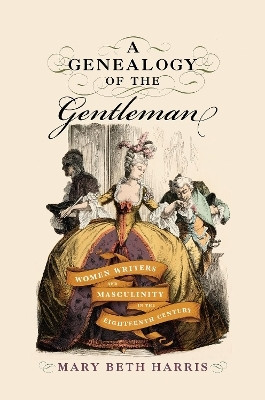
A Genealogy of the Gentleman(English, Paperback, Harris Mary Beth)
- Harris Mary Beth
Paperback & Hardcover deals ―
Amazon IndiaGOFlipkart ₹ 4592SnapdealGOSapnaOnlineGOJain Book AgencyGOBooks Wagon₹364Book ChorGOCrosswordGODC BooksGOe-book & Audiobook deals ―
Amazon India GOGoogle Play Books GOAudible GO* Price may vary from time to time.
* GO = We're not able to fetch the price (please check manually visiting the website).
Know about the book -
A Genealogy of the Gentleman(English, Paperback, Harris Mary Beth) is written by Harris Mary Beth and published by University of Delaware Press. It's available with International Standard Book Number or ISBN identification 1644533286 (ISBN 10) and 9781644533284 (ISBN 13).
A Genealogy of the Gentleman argues that eighteenth-century women writers made key interventions in modern ideals of masculinity and authorship through their narrative constructions of the gentleman. It challenges two latent critical assumptions: first, that the gentleman's masculinity is normative, private, and therefore oppositional to concepts of performance; and second, that women writers, from their disadvantaged position within a patriarchal society, had no real means of influencing dominant structures of masculinity. By placing writers such as Mary Davys, Eliza Haywood, Charlotte Lennox, Elizabeth Inchbald, and Mary Robinson in dialogue with canonical representatives of the gentleman author-Joseph Addison and Richard Steele, David Hume, Samuel Johnson, and Samuel Richardson-Mary Beth Harris shows how these women carved out a space for their literary authority not by overtly opposing their male critics and society's patriarchal structure, but by rewriting the persona of the gentleman as a figure whose very desirability and appeal were dependent on women's influence. Ultimately, this project considers the import of these women writers' legacy, both progressive and conservative, on hegemonic standards of masculinity that persist to this day.
