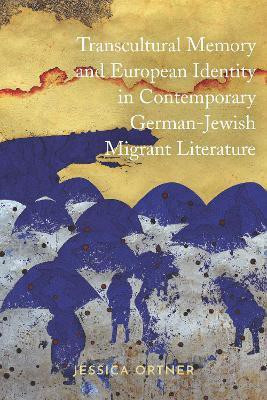
Transcultural Memory and European Identity in Contemporary German-Jewish Migrant Literature(English, Hardcover, Ortner Jessica Dr)
- Ortner Jessica Dr
Paperback & Hardcover deals ―
Amazon IndiaGOFlipkart ₹ 11054SnapdealGOSapnaOnlineGOJain Book AgencyGOBooks WagonGOBook ChorGOCrosswordGODC BooksGOe-book & Audiobook deals ―
Amazon India GOGoogle Play Books GOAudible GO* Price may vary from time to time.
* GO = We're not able to fetch the price (please check manually visiting the website).
Know about the book -
Transcultural Memory and European Identity in Contemporary German-Jewish Migrant Literature(English, Hardcover, Ortner Jessica Dr) is written by Ortner Jessica Dr and published by Boydell & Brewer Ltd. It's available with International Standard Book Number or ISBN identification 1640140220 (ISBN 10) and 9781640140226 (ISBN 13).
Examines how German-Jewish writers from Eastern Europe who migrated to Germany during or after the Cold War have widened European cultural memory to include the traumas of the Gulag.Preserving the memory of the Holocaust as a moral and ethical limit case is key to the European Union's attempt to construct a pan-European identity. But with the Eastern expansion of the EU, new member states have challenged the Holocaust's singularity, calling for the traumas of the Stalinist Gulag to be acknowledged much more explicitly. Thus even though Europe has been unified politically, it is divided by its diverging perceptions of the past. Jessica Ortner argues that German-Jewish writers from Eastern Europe and the GDR who migrated to Germany as refugees during or after the Cold War have responded critically to the need to widen European cultural memory to include the traumatic experiences of the East. The writers focused on include Katja Petrowskaja, Olga Grjasnowa, Lena Gorelik, Vladimir Vertlib, and Barbara Honigmann. A central focus of the book is the "traveling of memories" from Eastern Europe and the GDR to (Western) Germany and Austria. Introducing the term "literature of mnemonic migration," Ortner asserts that these authors' writings negotiate the mnemonic divide between East and West. They criticize the normative memory politics of both Germany and the Soviet Union and address not only the politically explosive question of how to remember both National Socialism and Communism but also the status of Jews in contemporary Germany.
