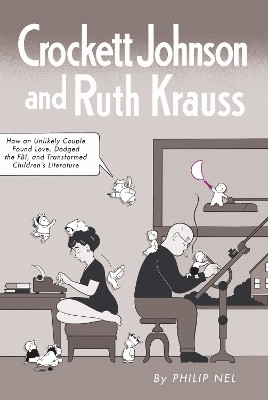
Crockett Johnson and Ruth Krauss(English, Paperback, Nel Philip)
- Nel Philip
Paperback & Hardcover deals ―
Amazon IndiaGOFlipkart ₹ 5143SnapdealGOSapnaOnlineGOJain Book AgencyGOBooks Wagon₹691Book ChorGOCrosswordGODC BooksGOe-book & Audiobook deals ―
Amazon India GOGoogle Play Books GOAudible GO* Price may vary from time to time.
* GO = We're not able to fetch the price (please check manually visiting the website).
Know about the book -
Crockett Johnson and Ruth Krauss(English, Paperback, Nel Philip) is written by Nel Philip and published by University Press of Mississippi. It's available with International Standard Book Number or ISBN identification 1617036366 (ISBN 10) and 9781617036361 (ISBN 13).
Crockett Johnson (born David Johnson Leisk, 1906-1975) and Ruth Krauss (1901-1993) were a husband-and-wife team that created such popular children's books as The Carrot Seed and How to Make an Earthquake. Separately, Johnson created the enduring children's classic Harold and the Purple Crayon and the groundbreaking comic strip Barnaby. Krauss wrote over a dozen children's books illustrated by others, and pioneered the use of spontaneous, loose-tongued kids in children's literature. Together, Johnson and Krauss's style--whimsical writing, clear and minimalist drawing, and a child's point-of-view--is among the most revered and influential in children's literature and cartooning, inspiring the work of Maurice Sendak, Charles M. Schulz, Chris Van Allsburg, and Jon Scieszka. This critical biography examines their lives and careers, including their separate achievements when not collaborating. Using correspondence, sketches, contemporary newspaper and magazine accounts, archived and personal interviews, author Philip Nel draws a compelling portrait of a couple whose output encompassed children's literature, comics, graphic design, and the fine arts. Their mentorship of now-famous illustrator Maurice Sendak (Where the Wild Things Are) is examined at length, as is the couple's appeal to adult contemporaries such as Duke Ellington and Dorothy Parker. Defiantly leftist in an era of McCarthyism and Cold War paranoia, Johnson and Krauss risked collaborations that often contained subtly rendered liberal themes. Indeed, they were under FBI surveillance for years. Their legacy of considerable success invites readers to dream and to imagine, drawing paths that take them anywhere they want to go.
