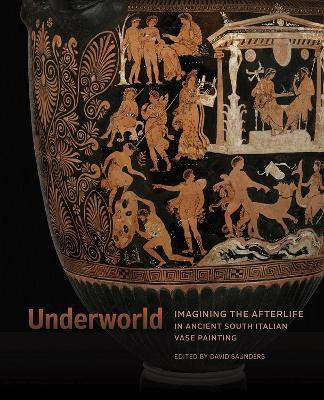
Underworld - Imagining the Afterlife in Ancient South Italian Vase Painting(English, Hardcover, Saunders David)
- Saunders David
Paperback & Hardcover deals ―
Amazon IndiaGOFlipkart ₹ 7936SnapdealGOSapnaOnlineGOJain Book AgencyGOBooks Wagon₹419Book ChorGOCrosswordGODC BooksGOe-book & Audiobook deals ―
Amazon India GOGoogle Play Books GOAudible GO* Price may vary from time to time.
* GO = We're not able to fetch the price (please check manually visiting the website).
Know about the book -
Underworld - Imagining the Afterlife in Ancient South Italian Vase Painting(English, Hardcover, Saunders David) is written by Saunders David and published by Getty Trust Publications. It's available with International Standard Book Number or ISBN identification 1606067346 (ISBN 10) and 9781606067345 (ISBN 13).
What happens to us when we die? What might the afterlife look like? For the ancient Greeks, the dead lived on, overseen by Hades in the Underworld. We read of famous sinners, such as Sisyphus, forever rolling his rock, and the fierce guard dog Kerberos, who was captured by Herakles. For mere mortals, ritual and religion offered possibilities for ensuring a happy existence in the beyond, and some of the richest evidence for beliefs about death comes from southern Italy, where the local Italic peoples engaged with Greek beliefs. Monumental funerary vases that accompanied the deceased were decorated with consolatory scenes from myth, and around forty preserve elaborate depictions of Hades's domain. For the first time in over four decades, these compelling vase paintings are brought together in one volume, with detailed commentaries and ample illustrations. The catalogue is accompanied by a series of essays by leading experts in the field, which provides a framework for understanding these intriguing scenes and their contexts. Topics include attitudes toward the afterlife in Greek ritual and myth, inscriptions on leaves of gold that provided guidance for the deceased; funerary practices and religious beliefs in Apulia, and the importance accorded to Orpheus and Dionysos. Drawing from a variety of textual and archaeological sources, this volume is an essential source for anyone interested in religion and belief in the ancient Mediterranean.
