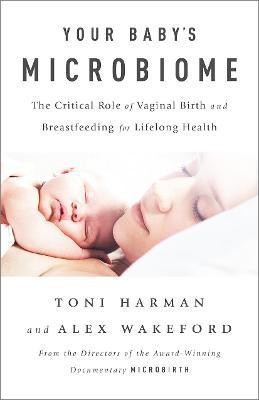
Your Baby's Microbiome(English, Paperback, Harman Toni)
- Harman Toni
Paperback & Hardcover deals ―
Amazon IndiaGOFlipkart ₹ 1525SnapdealGOSapnaOnlineGOJain Book AgencyGOBooks Wagon₹173Book ChorGOCrosswordGODC BooksGOe-book & Audiobook deals ―
Amazon India GOGoogle Play Books GOAudible GO* Price may vary from time to time.
* GO = We're not able to fetch the price (please check manually visiting the website).
Know about the book -
Your Baby's Microbiome(English, Paperback, Harman Toni) is written by Harman Toni and published by Chelsea Green Publishing Co. It's available with International Standard Book Number or ISBN identification 1603586954 (ISBN 10) and 9781603586955 (ISBN 13).
From the Directors of the Award-Winning Documentary Microbirth At least two amazing events happen during childbirth. There's the obvious main event, which is the emergence of a new human into the world. But there's another event taking place simultaneously, a crucial event that is not visible to the naked eye, an event that could determine the lifelong health of the baby. This is the seeding of the baby's microbiome, the community of "good" bacteria that we carry with us throughout our lives. The seeding of the microbiome, along with breastfeeding and skin-to-skin contact, kick-starts the baby's immune system and helps protect the infant from disease across a lifetime. Researchers are discovering, however, that interventions such as the use of synthetic oxytocin, antibiotics, C-sections, and formula feeding interfere with, or bypass completely, the microbial transfer from mother to baby. These bacteria are vital for human health, and science has linked an imbalance in the human microbiome with multiple chronic diseases. Drawing on the extensive research they carried out for their documentary film Microbirth, authors Toni Harman and Alex Wakeford reveal a fascinating new view of birth and how microscopic happenings can have lifelong consequences, for ourselves, our children-and our species as a whole.
