Labor, Civil Rights, and the Hughes Tool Company(English, Hardcover, Botson Michael R.)
- Botson Michael R.
Paperback & Hardcover deals ―
Amazon IndiaGOFlipkart ₹ 4213SnapdealGOSapnaOnlineGOJain Book AgencyGOBooks Wagon₹2,448Book ChorGOCrosswordGODC BooksGOe-book & Audiobook deals ―
Amazon India GOGoogle Play Books GOAudible GO* Price may vary from time to time.
* GO = We're not able to fetch the price (please check manually visiting the website).
Know about the book -
Labor, Civil Rights, and the Hughes Tool Company(English, Hardcover, Botson Michael R.) is written by Botson Michael R. and published by Texas A & M University Press. It's available with International Standard Book Number or ISBN identification 1585444383 (ISBN 10) and 9781585444380 (ISBN 13).
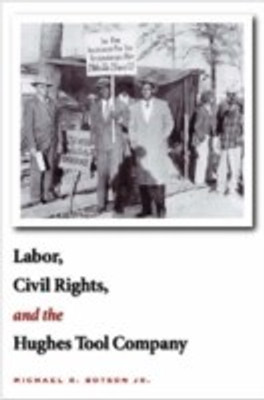
On July 12, 1964, in a momentous decision, the National Labor Relations Board decertified the racially segregated Independent Metal Workers Union as the collective bargaining agent at Houston's mammoth Hughes Tool Company. The unanimous decision ending nearly fifty years of Jim Crow unionism at the company marked the first ruling in the Labor Board's history that racial discrimination by a union violated the National Labor Relations Act and was therefore illegal. This ruling was for black workers the equivalent of the Brown v. Board of Education decision by the Supreme Court in the area of education. Botson traces the Jim Crow unionism of the company and the efforts of black union activists to bring civil rights issues into the workplace. His analysis clearly demonstrates that without federal intervention, workers at Hughes Tool would never have been able to overcome management's opposition to unionization and to racial equality. Drawing on interviews with many of the principals, as well as extensive mining of company and legal archives, Botson's study ""captures a moment in time when a segment of Houston's working-class seized the initiative and won economic and racial justice in their work place.
