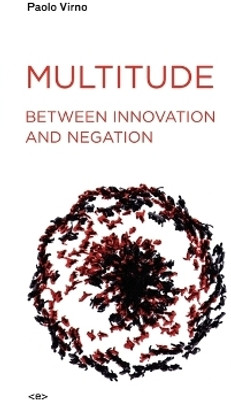
Multitude between Innovation and Negation(English, Paperback, Virno Paolo)
- Virno Paolo
Paperback & Hardcover deals ―
Amazon IndiaGOFlipkart ₹ 2795SnapdealGOSapnaOnlineGOJain Book AgencyGOBooks Wagon₹620Book ChorGOCrosswordGODC BooksGOe-book & Audiobook deals ―
Amazon India GOGoogle Play Books GOAudible GO* Price may vary from time to time.
* GO = We're not able to fetch the price (please check manually visiting the website).
Know about the book -
Multitude between Innovation and Negation(English, Paperback, Virno Paolo) is written by Virno Paolo and published by Autonomedia. It's available with International Standard Book Number or ISBN identification 1584350504 (ISBN 10) and 9781584350507 (ISBN 13).
The influential Italian thinker offers three essays in the political philosophy of language. Multitude between Innovation and Negation by Paolo Virno translated by James Cascaito. The publication of Paolo Virno's first book in English, Grammar of the Multitude, by Semiotext(e) in 2004 was an event within the field of radical political thought and introduced post-'68 currents in Italy to American readers. Multitude between Innovation and Negation, written several years later, offers three essays that take the reader on a journey through the political philosophy of language. "Wit and Innovative Action" explores the ambivalence inevitably arising when the semiotic and the semantic, grammar and experience, rule and regularity, and right and fact intersect. Virno unravels the infinite potential and wonders of everyday linguistic praxis and ambiguity. Wit, he argues, is a public performance, and its modus operandi characterizes human action in a state of emergency; it is a reaction, an articulate response, and a possible solution to a state of crisis. "Mirror Neurons, Linguistic Negation, and Mutual Recognition" examines the relationship of language and intersubjective empathy: without language, would human beings be able to recognize other members of their species? And finally, in "Multitude and Evil," Virno challenges the distinction between the state of nature and civil society and argues for a political institution that resembles language in its ability to be at once nature and history. Few thinkers take the risks required by innovation. Like a philosophical entrepreneur, Virno is engaged in no less than rewriting the dictionary of political theory, an urgent and ambitious project when language, caught in a permanent state of emergency impossible to sustain, desperately needs to articulate and enact new practices of freedom for the multitude. Paolo Virno is the author of several books, including A Grammar of the Multitude (Semiotext(e), 2004).
