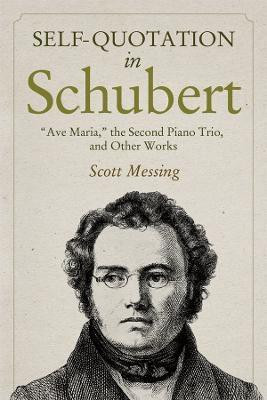
Self-Quotation in Schubert(English, Hardcover, Messing Scott Professor)
- Messing Scott Professor
Paperback & Hardcover deals ―
Amazon IndiaGOFlipkart ₹ 11059SnapdealGOSapnaOnlineGOJain Book AgencyGOBooks Wagon₹575Book ChorGOCrosswordGODC BooksGOe-book & Audiobook deals ―
Amazon India GOGoogle Play Books GOAudible GO* Price may vary from time to time.
* GO = We're not able to fetch the price (please check manually visiting the website).
Know about the book -
Self-Quotation in Schubert(English, Hardcover, Messing Scott Professor) is written by Messing Scott Professor and published by Boydell & Brewer Ltd. It's available with International Standard Book Number or ISBN identification 1580469655 (ISBN 10) and 9781580469654 (ISBN 13).
Examines the history of musical self-quotation, and reveals and explores a previously unidentified case of Schubert quoting one of his own songs in a major instrumental work.Enthusiasts and experts have long relished Schubert's quotations of his own music. This study centers on a previously unidentified pairing: "Ave Maria," one of his most beloved songs, and the Piano Trio no. 2, a masterpiece that holds a unique position in his career. Messing's Self-Quotation in Schubert interrogates the concept of self-quotation from the standpoints of terminology and authorial intent, and it demonstrates, for the first time, how Schubert's practice of self-quotation relates to prevailing practices in the late eighteenth and early nineteenth centuries. Messing goes on to analyze in detail the musical relationships between the two works and to investigate thecircumstances that led Schubert to compose each of them. "Ave Maria" is one of the few Schubert songs for which we have documentation of some early private performances, and the trio stood at the heart of Schubert's only public concert devoted to his works. Messing establishes that Schubert sought to convey an associative meaning with this self-quotation, trusting in his contemporaries' familiarity with the original melody and with Walter Scott's poem, a text that carried profound resonances in Catholic Vienna. Scrutinizing this evidence yields the symbolic purpose behind Schubert's allusion to "Ave Maria" in the piano trio: honoring the recently deceased Beethoven andvalidating Schubert as his legatee. SCOTT MESSING is Charles A. Dana Professor of Music Emeritus at Alma College.
