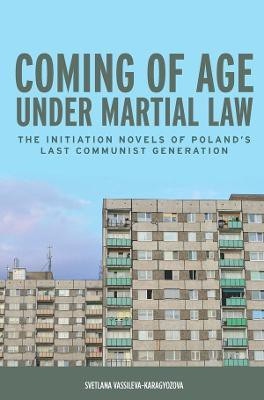
Coming of Age under Martial Law(English, Hardcover, Vassileva-Karagyozova Svetlana)
- Vassileva-Karagyozova Svetlana
Paperback & Hardcover deals ―
Amazon IndiaGOFlipkart ₹ 12887SnapdealGOSapnaOnlineGOJain Book AgencyGOBooks Wagon₹454Book ChorGOCrosswordGODC BooksGOe-book & Audiobook deals ―
Amazon India GOGoogle Play Books GOAudible GO* Price may vary from time to time.
* GO = We're not able to fetch the price (please check manually visiting the website).
Know about the book -
Coming of Age under Martial Law(English, Hardcover, Vassileva-Karagyozova Svetlana) is written by Vassileva-Karagyozova Svetlana and published by Boydell & Brewer Ltd. It's available with International Standard Book Number or ISBN identification 1580465285 (ISBN 10) and 9781580465281 (ISBN 13).
Examines a selection of post-1989 coming-of-age novels authored by the generation of Polish writers whose transition from adolescence to adulthood coincided with Poland's transition from communism to liberal democracy.2016 CHOICE Outstanding Academic Title This volume is a study of approximately thirty coming-of-age Polish novels written by the so-called '89ers -- the generation who became adults just as Communist rule was ending. Narrating fictionalized childhoods in Poland in the 1970s and '80s and the transition to adulthood in the late '80s and early '90s, these novels depict the consequences of the fall of Communism for their protagonists' maturation process. Svetlana Vassileva-Karagyozova argues that the liminal aspects of these narratives, in which the protagonists' rites of passage remain suspended in important ways, reflect the effects of the cataclysmic events of the late 1980s as well as the ways in which, for the Polish '89ers, the clash with their predecessors did not produce the anticipated generational change in leadership. Instead, the elders refused to give up their leadership positions, whilethe young were stifled in their development and occupied marginal social spaces. In Vassileva-Karagyozova's fascinating account, these novels illuminate the authors' attempts to define themselves as a generation as well as to narrate the sociocultural shift in democratic Poland from collectivism to Western-style individualism. Svetlana Vassileva-Karagyozova is associate professor of Slavic languages and literatures at the University of Kansas.
