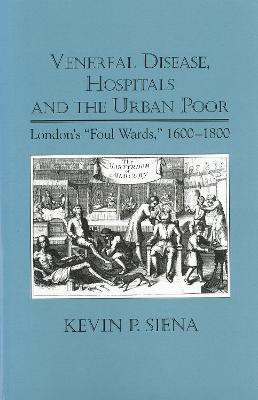
Venereal Disease, Hospitals and the Urban Poor(English, Hardcover, Siena Kevin P.)
- Siena Kevin P.
Paperback & Hardcover deals ―
Amazon IndiaGOFlipkart ₹ 3374SnapdealGOSapnaOnlineGOJain Book AgencyGOBooks Wagon₹2,302Book ChorGOCrosswordGODC BooksGOe-book & Audiobook deals ―
Amazon India GOGoogle Play Books GOAudible GO* Price may vary from time to time.
* GO = We're not able to fetch the price (please check manually visiting the website).
Know about the book -
Venereal Disease, Hospitals and the Urban Poor(English, Hardcover, Siena Kevin P.) is written by Siena Kevin P. and published by Boydell & Brewer Ltd. It's available with International Standard Book Number or ISBN identification 1580461484 (ISBN 10) and 9781580461481 (ISBN 13).
This book explores how London society responded to the dilemma of the rampant spread of the pox among the poor. Some have asserted that public authorities turned their backs on the "foul" and only began to offer care for venerealpatients in the Enlightenment. An exploration of hospitals and workhouses shows a much more impressive public health response. London hospitals established "foul wards" at least as early as the mid-sixteenth century. Reconstruction of these wards shows that, far from banning paupers with the pox, hospitals made treating them one of their primary services. Not merely present in hospitals, venereal patients were omnipresent. Yet the "foul" comprised a uniquecategory of patient. The sexual nature of their ailment guaranteed that they would be treated quite differently than all other patients. Class and gender informed patients' experiences in crucial ways. The shameful nature of the disease, and the gendered notion of shame itself, meant that men and women faced quite different circumstances. There emerged a gendered geography of London hospitals as men predominated in fee-charging hospitals, while sickwomen crowded into workhouses. Patients frequently desired to conceal their infection. This generated innovative services for elite patients who could buy medical privacy by hiring their own doctor. However, the public scrutiny that hospitalization demanded forced poor patients to be creative as they sought access to medical care that they could not afford. Thus, Venereal Disease, Hospitals and the Urban Poor offers new insights on patients' experiences of illness and on London's health care system itself. Kevin Siena is Assistant Professor of History at Trent University.
