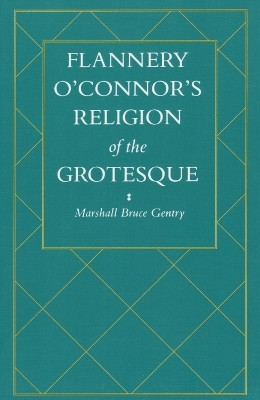
Flannery O'Connor's Religion of the Grotesque(English, Paperback, Gentry Marshall Bruce)
- Gentry Marshall Bruce
Paperback & Hardcover deals ―
Amazon IndiaGOFlipkart ₹ 3959SnapdealGOSapnaOnlineGOJain Book AgencyGOBooks Wagon₹1,030Book ChorGOCrosswordGODC BooksGOe-book & Audiobook deals ―
Amazon India GOGoogle Play Books GOAudible GO* Price may vary from time to time.
* GO = We're not able to fetch the price (please check manually visiting the website).
Know about the book -
Flannery O'Connor's Religion of the Grotesque(English, Paperback, Gentry Marshall Bruce) is written by Gentry Marshall Bruce and published by University Press of Mississippi. It's available with International Standard Book Number or ISBN identification 1578068657 (ISBN 10) and 9781578068654 (ISBN 13).
This new assessment of a major southern writer's work offers a revisionist view of her characters, who in the past twenty-five years of critical attention too often and too easily have been labeled grotesque. O'Connor's stories and novels are usually considered mere dramatizations of her stated orthodox religious commitments. According to the predominant view, the typical O'Connor work consists of a set of corrupt characters and an authoritative narrator who analyzes their theological errors. When redemption occurs, according to this view, it results from forces outside the character and against that character's will. Although such a reading adequately describes a few works, it misunderstands O'Connor's general handling of narration and of characterization. Marshall Bruce Gentry proposes new positions on O'Connor's narration and on the role of the grotesque in her characterization. By investigating the nature of religious experience in her works, he concludes that O'Connor's primary interest is redemption achieved by grotesque and unconscious means. Often in O'Connor's works, redemption becomes a moment of freedom in a continuing process of degradation and reformation. The real focus of O'Connor's fiction is the grotesque path toward redemption. As Gentry points out, by sending themselves toward physical annihilation, her characters typically take control of their redemption.
