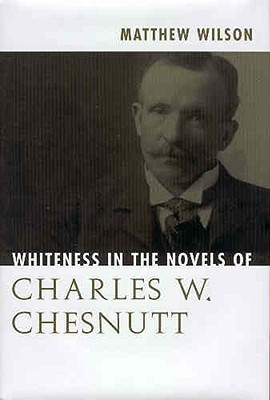
Whiteness in the Novels of Charles W. Chesnutt(English, Hardcover, Wilson Matthew)
- Wilson Matthew
Paperback & Hardcover deals ―
Amazon IndiaGOFlipkart ₹ 2754SnapdealGOSapnaOnlineGOJain Book AgencyGOBooks Wagon₹988Book ChorGOCrosswordGODC BooksGOe-book & Audiobook deals ―
Amazon India GOGoogle Play Books GOAudible GO* Price may vary from time to time.
* GO = We're not able to fetch the price (please check manually visiting the website).
Know about the book -
Whiteness in the Novels of Charles W. Chesnutt(English, Hardcover, Wilson Matthew) is written by Wilson Matthew and published by University Press of Mississippi. It's available with International Standard Book Number or ISBN identification 1578066670 (ISBN 10) and 9781578066674 (ISBN 13).
Charles W. Chesnutt (1858-1932), critically acclaimed for his novels, short stories, and essays, was one of the most ambitious and influential African American writers of the late nineteenth and early twentieth centuries. Today recognized as a major innovator of American fiction, Chesnutt is an important contributor to de-romanticizing trends in post-Civil War Southern literature, and a singular voice among turn-of-the-century realists who wrote about race in American life. Whiteness in the Novels of Charles W. Chesnutt is the first study to focus exclusively on Chesnutt's novels. Examining the three published in Chesnutt's lifetime-The House Behind the Cedars, The Marrow of Tradition, and The Colonel's Dream-as well as his posthumously published novels, this study explores the dilemma of a black writer who wrote primarily for a white audience. Throughout, Matthew Wilson analyzes the ways in which Chesnutt crafted narratives for his white readership and focuses on how he attempted to infiltrate and manipulate the feelings and convictions of that audience. Wilson pays close attention to the genres in which Chesnutt was working and also to the social and historical context of the novels. In articulating the development of Chesnutt's career, Wilson shows how Chesnutt's views on race evolved. By the end of his career, he felt that racial differences were not genetically inherent, but social constructions based on our background and upbringing. Finally, the book closely examines Chesnutt's unpublished manuscripts that did not deal with race. Even in these works, in which African Americans are only minor characters, Wilson finds Chesnutt engaged with the conundrum of race and reveals him as one of America's most significant writers on the subject. Matthew Wilson is a professor of humanities and writing at Penn State University, Harrisburg. He is the editor of Charles W. Chesnutt's Paul Marchand, F.M.C. (University Press of Mississippi).
