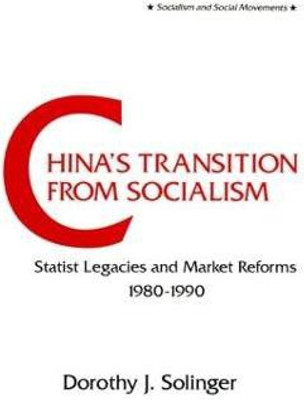
China's Transition from Socialism?(English, Paperback, Solinger Dorothy J.)
- Solinger Dorothy J.
Paperback & Hardcover deals ―
Amazon IndiaGOFlipkart ₹ 2533SnapdealGOSapnaOnlineGOJain Book AgencyGOBooks Wagon₹1,934Book ChorGOCrosswordGODC BooksGOe-book & Audiobook deals ―
Amazon India GOGoogle Play Books GOAudible GO* Price may vary from time to time.
* GO = We're not able to fetch the price (please check manually visiting the website).
Know about the book -
China's Transition from Socialism?(English, Paperback, Solinger Dorothy J.) is written by Solinger Dorothy J. and published by Taylor & Francis Inc. It's available with International Standard Book Number or ISBN identification 1563240688 (ISBN 10) and 9781563240683 (ISBN 13).
The essays in this volume address the industrial, commercial, urban and regional reforms of China's planned economy during the 1980s. The emphasis is on the dominating institutional and bureaucratic presence of the state even as it sought to loosen the pre-1979 vertically structured centralised command system and to introduce some market principles to stimulate economic activity. The essays fall into four categories: theoretical and policy discussions and debates at the central leadership level; reform of the urban economy and of inter-regional relations; industrial and commercial reforms; and the rise and position of the new entrepreneurial class. Many of the essays draw on interviews with Chinese economic officials in the Central China city of Wuhan and therefore this is the only study that uses local data on actual operations of reforms from a Chinese city; the other sources are the Chinese press and Chinese official and scholarly journals. In each of the categories there are pieces from different points in the chronological process of reform. This study begins with the first theoretical discussions among China's economists and top political leaders in the late 1970s and concludes with experiments with bankruptcy and stock markets in the late 1980s. The countervailing heavy presence of the state at both the policy and the practical levels throughout the reform decade is its unifying theme.
