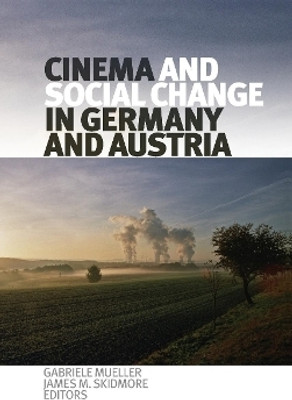
Cinema and Social Change in Germany and Austria(English, Paperback, unknown)
- unknown
Paperback & Hardcover deals ―
Amazon IndiaGOFlipkart ₹ 4310SnapdealGOSapnaOnlineGOJain Book AgencyGOBooks Wagon₹502Book ChorGOCrosswordGODC BooksGOe-book & Audiobook deals ―
Amazon India GOGoogle Play Books GOAudible GO* Price may vary from time to time.
* GO = We're not able to fetch the price (please check manually visiting the website).
Know about the book -
Cinema and Social Change in Germany and Austria(English, Paperback, unknown) is written by unknown and published by Wilfrid Laurier University Press. It's available with International Standard Book Number or ISBN identification 1554585600 (ISBN 10) and 9781554585601 (ISBN 13).
During the last decade, contemporary German and Austrian cinema has grappled with new social and economic realities. The "cinema of consensus," a term coined to describe the popular and commercially oriented filmmaking of the 1990s, has given way to a more heterogeneous and critical cinema culture. Making the greatest artistic impact since the 1970s, contemporary cinema is responding to questions of globalization and the effects of societal and economic change on the individual. This book explores this trend by investigating different thematic and aesthetic strategies and alternative methods of film production and distribution. Functioning both as a product and as an agent of globalizing processes, this new cinema mediates and influences important political and social debates. The contributors illuminate these processes through their analyses of cinema's intervention in discourses on such concepts as "national cinema," the effects of globalization on social mobility, and the emergence of a "global culture." The essays illustrate the variety and inventiveness of contemporary Austrian and German filmmaking and highlight the complicated interdependencies between global developments and local specificities. They confirm a broader trend toward a more complex, critical, and formally diverse cinematic scene. This book offers insights into the strategies employed by German and Austrian filmmakers to position themselves between the commercial pressures of the film industry and the desire to mediate or even attempt to affect social change. It will be of interest to scholars in film studies, cultural studies, and European studies.
