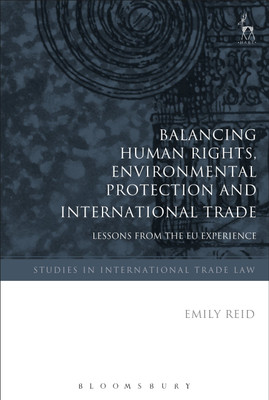
Balancing Human Rights, Environmental Protection and International Trade(English, Paperback, Reid Emily)
- Reid Emily
Paperback & Hardcover deals ―
Amazon IndiaGOFlipkart ₹ 5136SnapdealGOSapnaOnlineGOJain Book AgencyGOBooks Wagon₹976Book ChorGOCrosswordGODC BooksGOe-book & Audiobook deals ―
Amazon India GOGoogle Play Books GOAudible GO* Price may vary from time to time.
* GO = We're not able to fetch the price (please check manually visiting the website).
Know about the book -
Balancing Human Rights, Environmental Protection and International Trade(English, Paperback, Reid Emily) is written by Reid Emily and published by Bloomsbury Publishing PLC. It's available with International Standard Book Number or ISBN identification 1509913807 (ISBN 10) and 9781509913800 (ISBN 13).
This book explores the means by which economic liberalisation can be reconciled with human rights and environmental protection in the regulation of international trade. It is primarily concerned with identifying the lessons the international community can learn, specifically in the context of the WTO, from decades of European Community and Union experience in facing this question. The book demonstrates first that it is possible to reconcile the pursuit of economic and non-economic interests, that the EU has found a mechanism by which to do so, and that the application of the principle of proportionality is fundamental to the realisation of this. It is argued that the EU approach can be characterised as a practical application of the principle of sustainable development. Secondly, from the analysis of the EU experience, this book identifies fundamental conditions crucial to achieving this 'reconciliation'. Thirdly, the book explores the implications of lessons from the EU experience for the international community. In so doing it assesses both the potential and limits of the existing international regulatory framework for such reconciliation. The book develops a deeper understanding of the inter-relationship between the legal regulation of economic and non-economic development, adding clarity to the debate in a controversial area. It argues that a more holistic approach to the consideration of 'development', encompassing economic and non-economic concerns - 'sustainable' development - is not only desirable in principle but realisable in practice.
