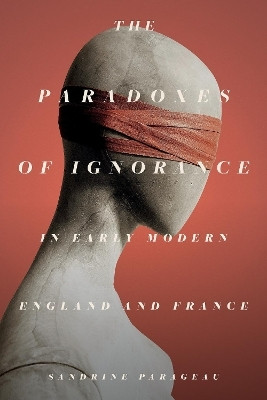
The Paradoxes of Ignorance in Early Modern England and France(English, Electronic book text, Parageau Sandrine)
- Parageau Sandrine
Paperback & Hardcover deals ―
Amazon IndiaGOFlipkart ₹ 3243SnapdealGOSapnaOnlineGOJain Book AgencyGOBooks Wagon₹905Book ChorGOCrosswordGODC BooksGOe-book & Audiobook deals ―
Amazon India GOGoogle Play Books ₹16.5Audible GO* Price may vary from time to time.
* GO = We're not able to fetch the price (please check manually visiting the website).
Know about the book -
The Paradoxes of Ignorance in Early Modern England and France(English, Electronic book text, Parageau Sandrine) is written by Parageau Sandrine and published by Stanford University Press. It's available with International Standard Book Number or ISBN identification 1503635325 (ISBN 10) and 9781503635326 (ISBN 13).
In the early modern period, ignorance was commonly perceived as a sin, a flaw, a defect, and even a threat to religion and the social order. Yet praises of ignorance were also expressed in the same context. Reclaiming the long-lasting legacy of medieval doctrines of ignorance and taking a comparative perspective, Sandrine Parageau tells the history of the apparently counter-intuitive moral, cognitive and epistemological virtues attributed to ignorance in the long seventeenth century (1580s-1700) in England and in France. With close textual analysis of hitherto neglected sources and a reassessment of canonical philosophical works by Montaigne, Bacon, Descartes, Locke, and others, Parageau specifically examines the role of ignorance in the production of knowledge, identifying three common virtues of ignorance as a mode of wisdom, a principle of knowledge, and an epistemological instrument, in philosophical and theological works. How could an essentially negative notion be turned into something profitable and even desirable? Taken in the context of Renaissance humanism, the Reformation and the "Scientific Revolution"-which all called for a redefinition and reaffirmation of knowledge-ignorance, Parageau finds, was not dismissed in the early modern quest for renewed ways of thinking and knowing. On the contrary, it was assimilated into the philosophical and scientific discourses of the time. The rehabilitation of ignorance emerged as a paradoxical cornerstone of the nascent modern science.
