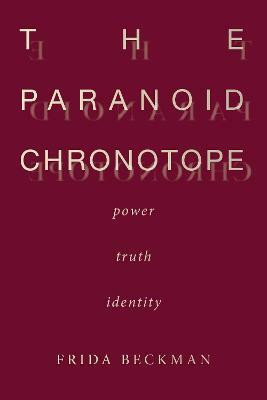
The Paranoid Chronotope(English, Paperback, Beckman Frida)
- Beckman Frida
Paperback & Hardcover deals ―
Amazon IndiaGOFlipkart ₹ 3136SnapdealGOSapnaOnlineGOJain Book AgencyGOBooks Wagon₹599Book ChorGOCrosswordGODC BooksGOe-book & Audiobook deals ―
Amazon India GOGoogle Play Books GOAudible GO* Price may vary from time to time.
* GO = We're not able to fetch the price (please check manually visiting the website).
Know about the book -
The Paranoid Chronotope(English, Paperback, Beckman Frida) is written by Beckman Frida and published by Stanford University Press. It's available with International Standard Book Number or ISBN identification 1503631605 (ISBN 10) and 9781503631601 (ISBN 13).
Why does it seem like our everyday life is shadowed by something menacing? This book identifies and illuminates paranoia as a significant feature of contemporary American society and culture. Centering on what it identifies as three key dimensions - power, truth, and identity - in three different contexts - society, literature, and critique - the book explores and explains the increasing influence of paranoid thinking in American society during the second half of the twentieth century and first decades of the twenty-first, a period that has seen the rise of control systems and neoliberal ascendency. Inquiring about the predominance of white, male, American subjects in paranoid culture, Frida Beckman recognizes the antagonistic maintenance and fortification of a conception of the autonomous individual that perceives itself to be under threat. Identifying such paranoia as emerging from an increasingly disjunctive relation between this conception of the subject and the changing nature of the public sphere, she develops the concept of the paranoid chronotope as a tool for the theoretical analysis of social, literary, and critical practices today. Investigating twenty-first century paranoid fictions, New Sincerity novels, conspiracist online culture, and postcritique, Beckman shows how the paranoid chronotope constitutes a recurring feature of modern consciousness.
