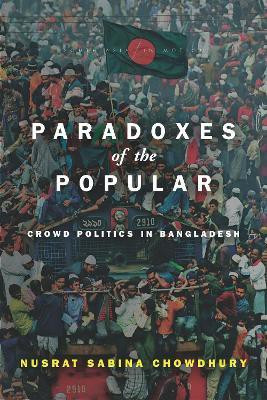
Paradoxes of the Popular(English, Electronic book text, Chowdhury Nusrat Sabina)
- Chowdhury Nusrat Sabina
Paperback & Hardcover deals ―
Amazon IndiaGOFlipkart ₹ 3000SnapdealGOSapnaOnlineGOJain Book AgencyGOBooks Wagon₹905Book ChorGOCrosswordGODC BooksGOe-book & Audiobook deals ―
Amazon India GOGoogle Play Books ₹16.5Audible GO* Price may vary from time to time.
* GO = We're not able to fetch the price (please check manually visiting the website).
Know about the book -
Paradoxes of the Popular(English, Electronic book text, Chowdhury Nusrat Sabina) is written by Chowdhury Nusrat Sabina and published by Stanford University Press. It's available with International Standard Book Number or ISBN identification 1503609480 (ISBN 10) and 9781503609488 (ISBN 13).
Few places are as politically precarious as Bangladesh, even fewer as crowded. Its 57,000 or so square miles are some of the world's most inhabited. Often described as a definitive case of the bankruptcy of postcolonial governance, it is also one of the poorest among the most densely populated nations. In spite of an overriding anxiety of exhaustion, there are a few important caveats to the familiar feelings of despair-a growing economy, and an uneven, yet robust, nationalist sentiment-which, together, generate revealing paradoxes. In this book, Nusrat Sabina Chowdhury offers insight into what she calls "the paradoxes of the popular," or the constitutive contradictions of popular politics. The focus here is on mass protests, long considered the primary medium of meaningful change in this part of the world. Chowdhury writes provocatively about political life in Bangladesh in a rich ethnography that studies some of the most consequential protests of the last decade, spanning both rural and urban Bangladesh. By making the crowd its starting point and analytical locus, this book tacks between multiple sites of public political gatherings and pays attention to the ephemeral and often accidental configurations of the crowd. Ultimately, Chowdhury makes an original case for the crowd as a defining feature and a foundational force of democratic practices in South Asia and beyond.
