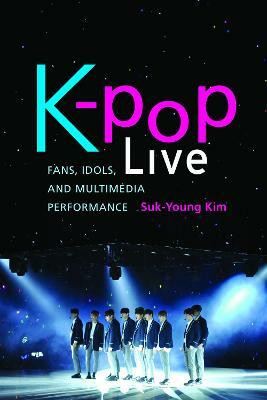
K-pop Live(English, Hardcover, Kim Suk-Young)
- Kim Suk-Young
Paperback & Hardcover deals ―
Amazon IndiaGOFlipkart ₹ 11973SnapdealGOSapnaOnlineGOJain Book AgencyGOBooks Wagon₹3,100Book ChorGOCrosswordGODC BooksGOe-book & Audiobook deals ―
Amazon India GOGoogle Play Books GOAudible GO* Price may vary from time to time.
* GO = We're not able to fetch the price (please check manually visiting the website).
Know about the book -
K-pop Live(English, Hardcover, Kim Suk-Young) is written by Kim Suk-Young and published by Stanford University Press. It's available with International Standard Book Number or ISBN identification 1503605035 (ISBN 10) and 9781503605039 (ISBN 13).
1990s South Korea saw the transition from a military dictatorship to a civilian government, from a manufacturing economy to a postindustrial hub, and from a cloistered society to a more dynamic transnational juncture. These seismic shifts had a profound impact on the media industry and the rise of K-pop. In K-pop Live, Suk-Young Kim investigates the meteoric ascent of Korean popular music in relation to the rise of personal technology and social media, situating a feverish cross-media partnership within the Korean historical context and broader questions about what it means to be "live" and "alive." Based on in-depth interviews with K-pop industry personnel, media experts, critics, and fans, as well as archival research, K-pop Live explores how the industry has managed the tough sell of live music in a marketplace in which virtually everything is available online. Teasing out digital media's courtship of "liveness" in the production and consumption of K-pop, Kim investigates the nuances of the affective mode in which human subjects interact with one another in the digital age. Observing performances online, in concert, and even through the use of holographic performers, Kim offers readers a step-by-step guide through the K-pop industry's variegated efforts to diversify media platforms as a way of reaching a wider global network of music consumers. In an era when digital technology inserts itself into nearly all social relationships, Kim reveals how "what is live" becomes a question of how we exist as increasingly mediated subjects, fragmented and isolated by technological wonders while also longing for a sense of belonging and being alive through an interactive mode of exchange we often call "live."
