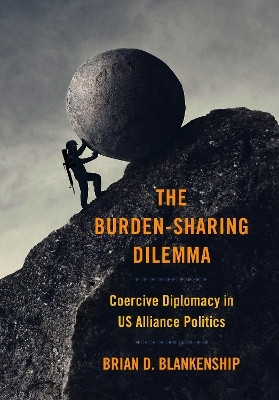
The Burden-Sharing Dilemma(English, Electronic book text, Blankenship Brian D.)
- Blankenship Brian D.
Paperback & Hardcover deals ―
Amazon IndiaGOFlipkart ₹ 2925SnapdealGOSapnaOnlineGOJain Book AgencyGOBooks Wagon₹3,609Book ChorGOCrosswordGODC BooksGOe-book & Audiobook deals ―
Amazon India GOGoogle Play Books ₹29.22Audible GO* Price may vary from time to time.
* GO = We're not able to fetch the price (please check manually visiting the website).
Know about the book -
The Burden-Sharing Dilemma(English, Electronic book text, Blankenship Brian D.) is written by Blankenship Brian D. and published by Cornell University Press. It's available with International Standard Book Number or ISBN identification 150177249X (ISBN 10) and 9781501772498 (ISBN 13).
The Burden-Sharing Dilemma examines the conditions under which the United States is willing and able to pressure its allies to assume more responsibility for their own defense. The United States has a mixed track record of encouraging allied burden-sharing-while it has succeeded or failed in some cases, it has declined to do so at all in others. This variation, Brian D. Blankenship argues, is because the United States tailors its burden-sharing pressure in accordance with two competing priorities: conserving its own resources and preserving influence in its alliances. Although burden-sharing enables great power patrons like the United States to lower alliance costs, it also empowers allies to resist patron influence. Blankenship identifies three factors that determine the severity of this burden-sharing dilemma and how it is managed: the latent military power of allies, the shared external threat environment, and the level of a patron's resource constraints. Through case studies of US alliances formed during the Cold War, he shows that a patron can mitigate the dilemma by combining assurances of protection with threats of abandonment and by exercising discretion in its burden-sharing pressure. Blankenship's findings dismantle assumptions that burden-sharing is always desirable but difficult to obtain. Patrons, as the book reveals, can in fact be reluctant to seek burden-sharing, and attempts to pass defense costs to allies can often be successful. At a time when skepticism of alliance benefits remains high and global power shifts threaten longstanding pacts, The Burden-Sharing Dilemma recalls and reconceives the value of burden-sharing and alliances.
