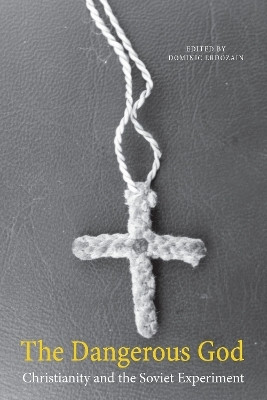
The Dangerous God(English, Electronic book text, unknown)
- unknown
Paperback & Hardcover deals ―
Amazon IndiaGOFlipkart ₹ 2617SnapdealGOSapnaOnlineGOJain Book AgencyGOBooks Wagon₹311Book ChorGOCrosswordGODC BooksGOe-book & Audiobook deals ―
Amazon India GOGoogle Play Books GOAudible GO* Price may vary from time to time.
* GO = We're not able to fetch the price (please check manually visiting the website).
Know about the book -
The Dangerous God(English, Electronic book text, unknown) is written by unknown and published by Cornell University Press. It's available with International Standard Book Number or ISBN identification 1501757695 (ISBN 10) and 9781501757693 (ISBN 13).
At the heart of the Soviet experiment was a belief in the impermanence of the human spirit: souls could be engineered; conscience could be destroyed. The project was, in many ways, chillingly successful. But the ultimate failure of a totalitarian regime to fulfill its ambitions for social and spiritual mastery had roots deeper than the deficiencies of the Soviet leadership or the chaos of a "command" economy. Beneath the rhetoric of scientific communism was a culture of intellectual and cultural dissidence, which may be regarded as the "prehistory of perestroika." This volume explores the contribution of Christian thought and belief to this culture of dissent and survival, showing how religious and secular streams of resistance joined in an unexpected and powerful partnership. The essays in The Dangerous God seek to shed light on the dynamic and subversive capacities of religious faith in a context of brutal oppression, while acknowledging the often-collusive relationship between clerical elites and the Soviet authorities. Against the Marxist notion of the "ideological" function of religion, the authors set the example of people for whom faith was more than an opiate; against an enduring mythology of secularization, they propose the centrality of religious faith in the intellectual, political, and cultural life of the late modern era. This volume will appeal to specialists on religion in Soviet history as well as those interested in the history of religion under totalitarian regimes.
